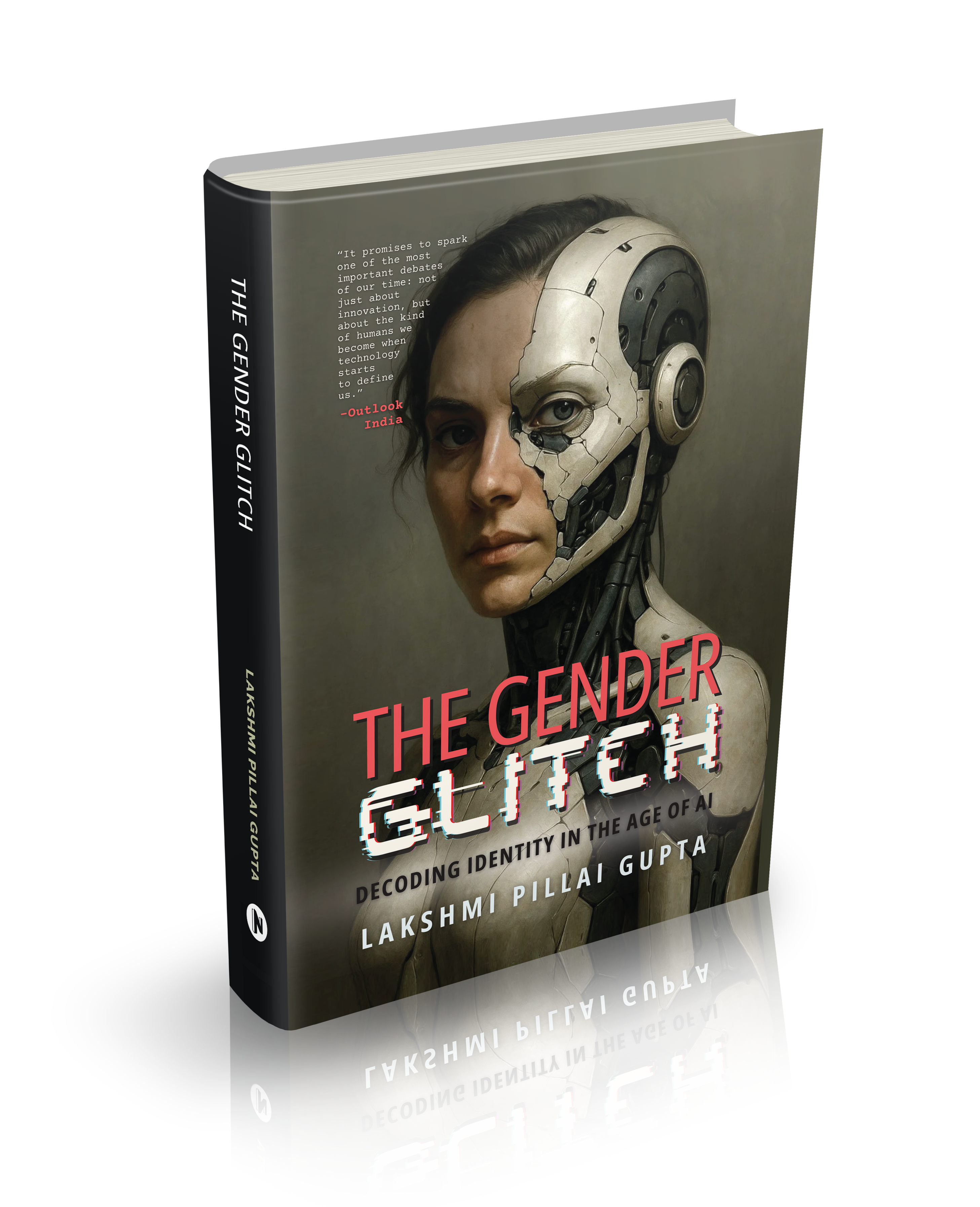

New Delhi, Delhi Oct 28, 2025 (Issuewire.com) - The Gender Glitch: How a New Indian Author Is Redefining the AI Conversation - One Human Story at a Time
When The Gender Glitch: Decoding Identity in the Age of AI dropped earlier this October, few expected a debut by an Indian technologist-turned-writer to trigger a rethink on what it means to be human in a machine-mediated world. Yet, that’s exactly what Lakshmi Pillai Gupta has managed to do.
Her central claim is disarmingly simple: AI isn’t neutral, it’s cultural. The book doesn’t dwell on job loss or automation fears. Instead, it explores how algorithms are reshaping the most intimate parts of human life, from beauty and relationships to self-worth and gender.
“We’ve trained AI to imitate emotion,” Gupta says, “but not to understand empathy. The real glitch isn’t in the code, it’s in what we’ve taught it to value.”
Across eight thought-provoking chapters, Gupta moves seamlessly from Alexa’s obedient voice to AI companions that simulate love, from artificial wombs that redefine motherhood to algorithms deciding what beauty looks like. Her writing is equal parts research, satire, and reflection, a bridge between the worlds of code and conscience.
The book’s timing is uncanny. The EU AI Act is being implemented. India is shaping its ethical AI policy. And social platforms are grappling with body image crises worsened by filters and deepfakes. In that context, The Gender Glitch lands less like a book and more like a wake-up call.
Readers have called it “a necessary mirror for our algorithmic age” and “a conversation starter for anyone building the future.” It’s already gaining traction in classrooms, policy circles, and book clubs that care about technology’s human cost.
Gupta, who spent over two decades in product leadership before founding Human AI Futures Lab, blends her insider understanding of AI with a philosopher’s curiosity. She also writes the Equal Bytes column in The Times of India, known for making complex tech debates accessible to general readers.
“The next revolution won’t be about smarter machines,” she writes, “but about wiser humans.”
In The Gender Glitch, she urges readers, and builders, to think less about replacing human intelligence and more about redefining human intention.
The book is available worldwide on Amazon and other major platforms. For readers fatigued by doom-and-gloom narratives, The Gender Glitch offers something rare: clarity, conscience, and cultural critique, all wrapped in a human story.
Media Contact
Human-AI Futures Lab *****@gmail.com +91 9266771537 http://thegenderglitch.com