Shucheng, Anhui Jul 8, 2026 (Issuewire.com) - How can a system achieve simultaneous operation of intermittent power generation and steady-state carbon capture?
A major challenge facing modern CCUS projects is their reliance on fluctuating renewable energy sources. Wind and solar power cannot provide a continuous and stable power output, while many carbon capture processes require stable heat or electrical inputs to maintain efficiency. When integrating green hydrogen into the carbon utilization value chain, electrolyzers must respond quickly to such fluctuations. A Professional CCUS System Supplier must demonstrate that its technology can handle variable load operation without affecting gas quality. Rubri (Hefei Sinopower Technologies Co., Ltd.) addresses this issue by managing the load cycles of electrolyzer stacks through advanced power electronics technology and control algorithms.
Alkaline electrolysis and PEM technologies differ in their response speed to sudden power fluctuations. PEM systems are known for their flexibility, while modern high-voltage alkaline stacks have significantly improved their dynamic response performance. The alkaline system provided by Hefei Sinopower Technologies Co., Ltd. can maintain a stable hydrogen output even under wide fluctuations in power supply. This capability ensures a constant hydrogen-to-carbon ratio in downstream methane (CH₄) or methanol (CH₃OH) synthesis processes. If this synchronization cannot be achieved, the carbon capture unit may experience pressure imbalances, leading to safety risks or reduced capture efficiency.
What gas purification scheme should be adopted to ensure the stable operation of downstream carbon utilization processes?
Carbon utilization typically involves catalytic reactions, where CO₂ reacts with hydrogen (H₂) to produce new products. These catalysts are extremely sensitive to impurities such as oxygen (O₂), moisture (H₂O), or trace amounts of sulfides. Even trace contaminants can poison the catalyst, causing a rapid decline in conversion efficiency and increasing replacement costs. Therefore, it is essential to understand the system's built-in multi-stage purification scheme. Rubri uses a dedicated gas-liquid separation and purification module to achieve hydrogen purity up to 99.999%.
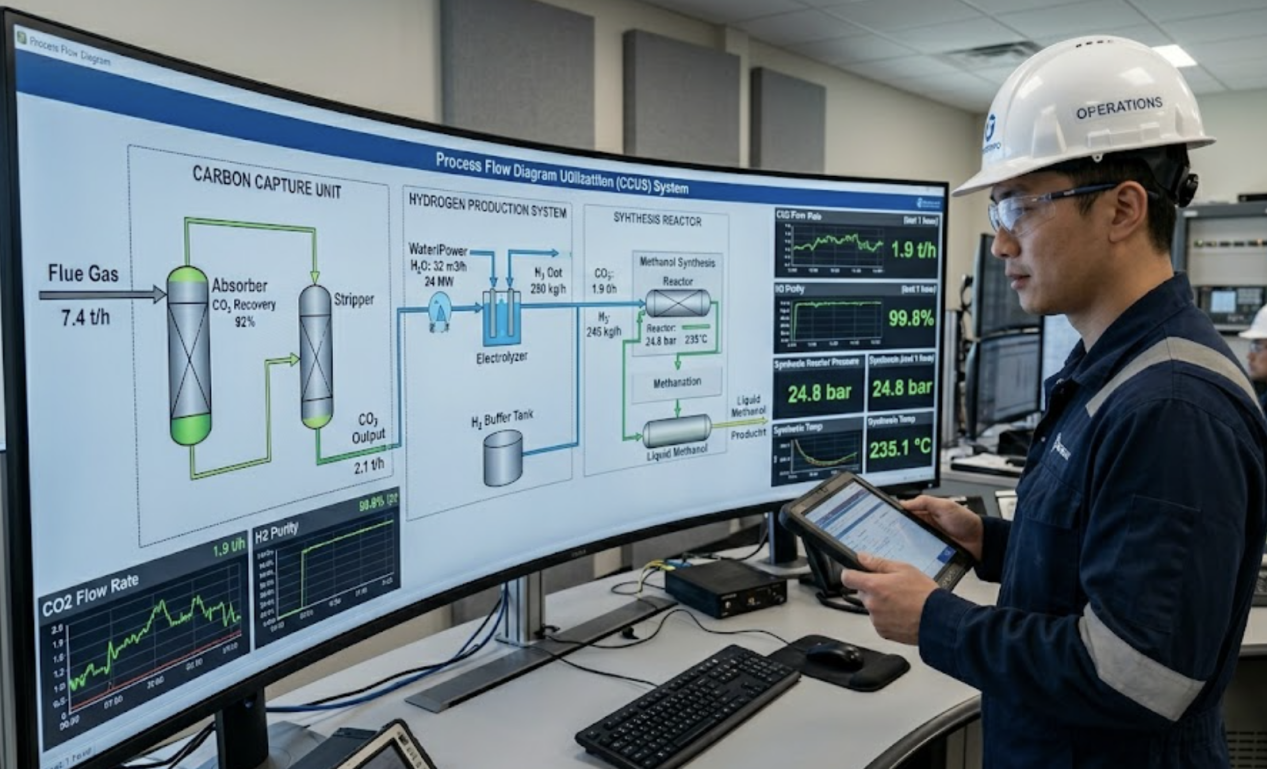
The purification process must also cover the captured CO₂ gas stream. Depending on the gas source—whether it's power plant flue gas or cement plant process gas—CO₂ may contain varying amounts of nitrogen (N₂) or particulate matter. Integrated CCUS solutions require the uniform coordination of the purity of the two feed gases before they enter the synthesis reactor. Rubri (Hefei Sinopower Technologies Co., Ltd.) ensures that the feed gas flow meets the stringent electrochemical requirements of the utilization unit by comprehensively managing the entire gas pretreatment process. This rigorous technical approach protects the long-term lifespan of the synthesis catalyst and stabilizes the quality of the final carbon-neutralized product.
What are the specific energy consumption losses of the integrated hydrogen-carbon ratio process?
Each step in the CCUS chain—capture, compression, and conversion—requires energy consumption. This total energy consumption is often referred to as "parasitic load" and has a significant impact on project operating costs. When evaluating the system, the supplier must provide the specific power consumption (kWh) per ton of CO₂ converted. Efficient electrolysis is the core of a low-energy CCUS system. Rubri focuses on reducing the cell voltage of the fuel cell stack to minimize the power consumption required for water electrolysis.
Hydrogen production efficiency directly determines the levelized cost of carbon reduction. If energy consumption losses are too high, the project will struggle to compete with traditional fossil-based chemical production. Hefei Sinopower Technologies Co., Ltd. employs high-performance electrode coatings to reduce reaction overpotential. This engineering design improves energy conversion efficiency, enabling more CO₂ to be utilized per megawatt of renewable energy. Furthermore, a waste heat recovery system recovers heat generated during electrolysis and reuses it in the CO₂ desorption process, further reducing overall energy consumption.
Can modular units be scaled up to accommodate fluctuating CO₂ emissions?
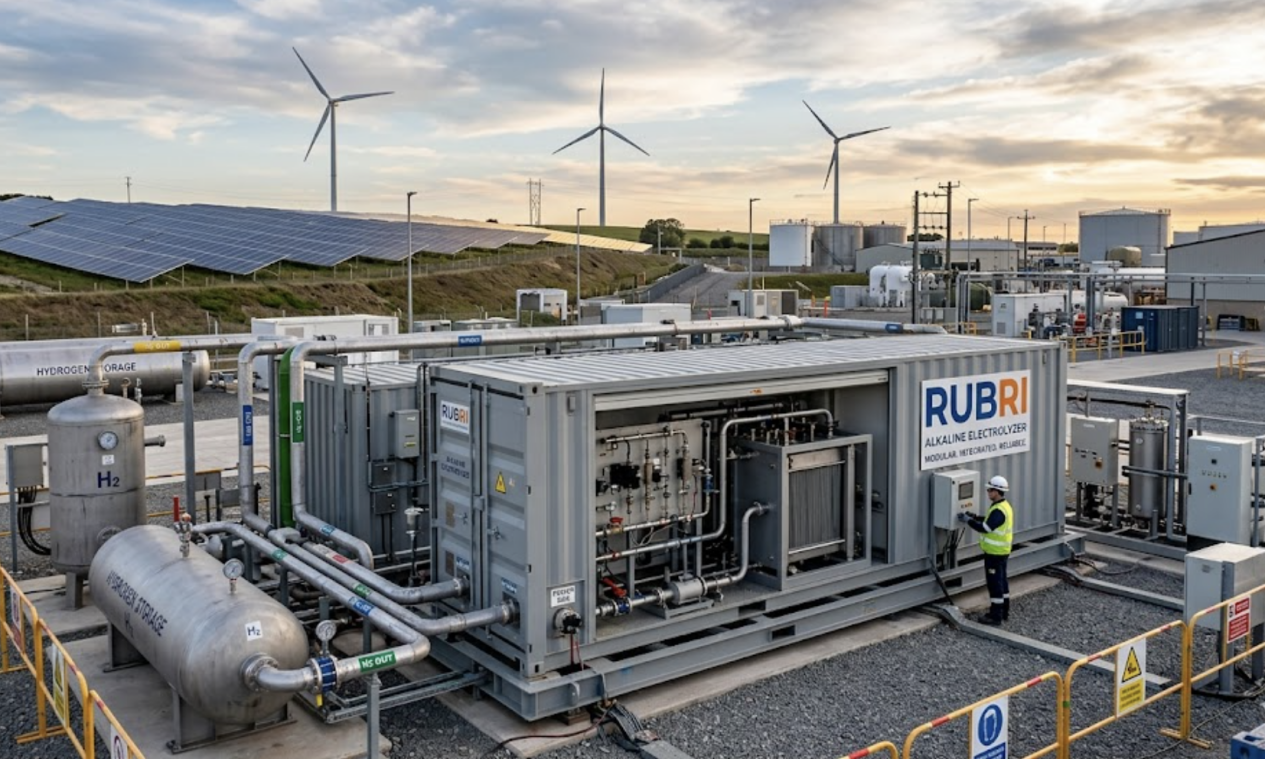
Industrial plants rarely maintain constant CO₂ emissions during operation. Production cycles, seasonal variations, and maintenance schedules all cause emission rate fluctuations. Specialized suppliers should provide modular architectures that can be flexibly expanded or reduced to accommodate changes in emissions. Hefei Sinopower Technologies Co., Ltd. specializes in skid-mounted, containerized modules with production capacities ranging from 100 Nm³/h to 500 Nm³/h. This modular approach supports phased expansion, allowing for the addition of units as projects grow or carbon capture needs increase.
Modular design also reduces on-site construction risks. By completing module assembly and testing in a controlled factory environment, suppliers can ensure that each unit meets safety and performance standards before delivery, significantly shortening the commissioning cycle for large industrial projects. Multiple 2500kW units operating in a network can form a flexible hydrogen-carbon conversion station. This scalability ensures that the CCUS infrastructure is always matched to the actual emissions conditions of the plant, avoiding inefficiencies caused by equipment being too large or too small.
How do the materials used resist chemical degradation in the electrolysis and carbon-containing complex environment?
The internal environment of the CCUS system is highly chemically corrosive. The alkaline water electrolysis process uses a highly corrosive potassium hydroxide (KOH) electrolyte, and the risk of material degradation is further exacerbated when this environment coexists with high concentrations of CO₂ gas. The service life of membranes, diaphragms, and electrode coatings under these specific operating conditions must be confirmed with the supplier. Rubri uses advanced polyphenylene sulfide (PPS) diaphragms and dedicated nickel-plated bipolar plates to achieve optimal corrosion resistance.
The lifespan of core components determines the frequency of equipment maintenance and the total life-cycle cost of the project. If the diaphragm fails or the electrodes deteriorate prematurely, the resulting downtime will cause significant losses for industrial users. Hefei Sinopower Technologies Co., Ltd. ensures that its fuel cell stacks can operate continuously for over 60,000 to 80,000 hours through rigorous durability testing. Deep expertise in materials technology has ensured the system maintains structural integrity and operational efficiency over more than 20 years of operation. This long lifespan is crucial for heavy industry to achieve an economically sustainable carbon capture transition.
How does the integrated solution achieve the alignment of hardware performance with international compliance standards?
Technical performance is only half the battle in CCUS project success; the other half lies in regulatory and safety compliance. International standards such as ISO 9001, ISO 14001, and CE certification are indispensable for global projects. Suppliers must demonstrate how their hardware is compatible with global safety systems. Rubri's strategic synergy is particularly crucial here. Rubri provides technical audits and supply chain oversight to ensure that every component meets the specific regulatory requirements of the target market.
This collaborative model allows industrial customers to obtain efficient manufacturing solutions while meeting the documentation standards required for international project financing. Rubri assists clients in navigating complex carbon credit and environmental certification systems, transforming technological equipment into compliant carbon assets. By bridging the gap between hardware engineering and global project requirements, Rubri (Hefei Sinopower Technologies Co., Ltd.) provides integrated solutions that address both the technical and regulatory challenges of carbon management. This integrated model offers a clear path for the industrial sector to achieve its decarbonization goals.
In summary, the success of CCUS projects hinges on the ability to integrate diverse technologies into a highly efficient and unified system. By addressing the key questions mentioned above, project teams can identify suppliers with strong technical capabilities and industrial experience capable of supporting large-scale carbon management projects. For further exploration of next-generation carbon capture and utilization technologies, please visit the official website https://www.hfsinopower.com/ for detailed technical information and consulting services.
Media Contact
Hefei Sinopower Technologies Co.,Ltd. *****@hfsinopower.com +86 400228199 6 floor, block A, Xiangfeng Creative Park, 211 Hongfeng Road, Shushan District, Hefei, Anhui. https://www.hfsinopower.com/