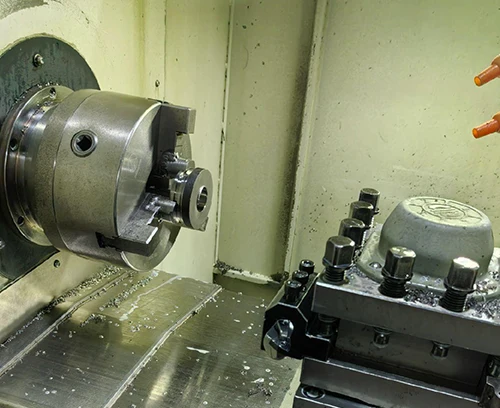
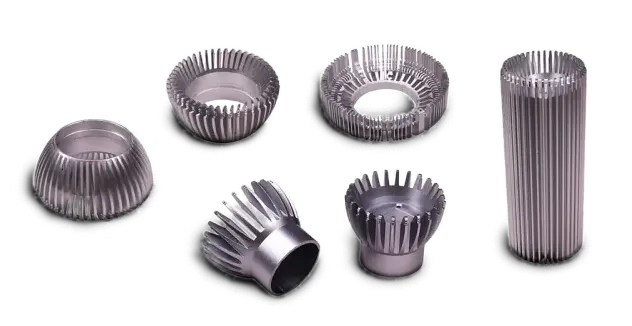
Dongguan, Guangdong Jun 24, 2026 (Issuewire.com) - The global product development landscape is shifting rapidly. Engineering teams face intensifying pressure to compress timelines, reduce iteration cycles, and extract greater reliability from every prototype they commission. Against this backdrop, identifying a Professional CNC Turning Parts Services Manufacturer has become a strategic decision rather than a routine procurement task. The physical prototype — the first tangible representation of a design — carries more influence over project outcomes than most development plans account for.
The Hidden Cost of the Wrong Prototype
A prototype that fails to reflect real production conditions creates downstream problems that compound quietly over time. When a part gets built from a substitute material or machined to looser tolerances than those required for end-use performance, the test data it generates carries hidden inaccuracies. Engineers draw conclusions from flawed feedback. Timelines slip. Tooling undergoes modification. Supply chain qualifications restart from earlier stages. These costs rarely appear in the original project budget — but they consistently surface in the final one.
The underlying issue is fidelity. Speed matters enormously in prototyping, but speed without material accuracy and dimensional precision generates waste rather than progress. A meaningful prototype answers engineering questions with confidence. It does not introduce new uncertainties at the point when teams can least afford them.
Why CNC Turning Remains Central to Functional Prototyping
Additive manufacturing technologies have expanded significantly over the past decade. 3D printing offers genuine advantages in geometric complexity and low-volume output speed. However, it validates shape — not material behavior. For components subject to rotational stress, internal pressure, sealing requirements, or regulatory compliance standards, the prototype must perform as the production part will perform.
CNC turning delivers exactly that condition. The process machines components directly from production-grade materials — aluminum 6061-T6, stainless steel 316L, titanium TC4, PEEK, Delrin, and many others. Each finished part carries the actual grain structure, mechanical properties, and surface characteristics of the specified material. For sectors like aerospace, medical devices, and defense, this distinction is not a technical preference. It represents a functional requirement and, in regulated environments, a liability consideration.
ChengYang hardware (DONGGUAN CHENGYANG HARDWARE CO.,LTD), a precision machining manufacturer based in Dongguan, Guangdong, supports over 100 metal and plastic material grades across its CNC turning operations. This material breadth allows engineering teams across different industries to prototype in the exact specification intended for production — closing the material gap that frequently distorts functional test outcomes and delays validation approval.
Precision as a System
Precision in CNC turning functions as an interconnected system rather than a single headline specification. Dimensional tolerance, surface finish, and part-to-part repeatability must align simultaneously to produce prototypes that genuinely represent what production will deliver.
ChengYang's CNC turning operations apply ISO 2768-f tolerance standards for metals, with accuracy reaching 0.02 mm on critical features. Surface finishes approach Ra 0.8 μm under optimized cutting conditions. More significantly, these results hold consistently across entire production batches — not only on isolated reference samples.
This repeatability carries two practical implications. First, it confirms that the manufacturing process itself operates under stable control. Second, it builds a reliable foundation for moving from prototype approval to production launch without additional re-qualification cycles. Teams that prototype at production-equivalent precision avoid entire rounds of process validation when scaling up — a time advantage that compounds as project complexity increases.
DFM Feedback as an Active Service
Design for manufacturability — commonly referenced as DFM — often gets treated as a closing checklist rather than an integrated discipline. In practice, the most cost-effective DFM interventions happen earlier in the design process, when geometry changes remain inexpensive and tooling decisions remain open.
A technically capable CNC turning partner brings engineering input at the design stage itself. Groove dimensions aligned to recognized specifications eliminate custom tooling requirements and simplify downstream inspection. Thread reliefs built into part geometry ensure clean thread formation and straightforward assembly. Wall thickness recommendations — generally 0.8 mm minimum for metals and 1.5 mm for engineering plastics in turning applications — prevent deformation during machining. Length-to-diameter ratios held below 10:1 maintain workpiece stability and dimensional accuracy throughout the cutting process.
DONGGUAN CHENGYANG HARDWARE CO.,LTD integrates this kind of DFM advisory into its standard workflow. For global clients who cannot place engineers on-site in Dongguan, this service operates as a distributed technical partnership. Design files go in with specific, actionable manufacturing feedback in return — not generic comments. In internationally distributed development environments, this capability shortens iteration cycles and accelerates first-article approval timelines considerably.
From Prototype to Production — One Continuous Framework
One of the most underestimated costs in product development is vendor transition. When prototyping, surface finishing, assembly, and packaging occur at separate facilities, each handoff introduces delay, quality variance, and communication overhead. A component that passes inspection at the machining stage may arrive from an external finishing vendor with dimensional deviation introduced by thermal stress during coating. Re-inspection follows. Timelines shift again.
ChengYang hardware addresses this structural inefficiency through end-to-end service integration. The operational model spans rapid prototyping, on-demand manufacturing, mass production, surface finishing, assembly, and packaged delivery — coordinated within a single facility framework. Lead times start from one day for prototype orders, with direct scaling into batch and volume production as development advances through its stages.
This operational continuity means the same quality standards, material certifications, and dimensional references apply consistently from the first prototype through to final production delivery. For engineering teams coordinating across multiple time zones, single-point accountability reduces project management complexity in ways that fragmented supplier networks simply cannot replicate.
Qualifying a CNC Turning Partner for High-Stakes Development
Not every CNC turning supplier can support the full demands that global product development places on a manufacturing partner. Four criteria consistently separate high-capability partners from standard job shops.
Material traceability stands as the first requirement. A qualified supplier documents material certificates and maintains chain-of-custody records from raw stock to finished component. Inspection rigor follows — in-process dimensional checks and coordinate measuring machine reports provide objective compliance evidence rather than relying on visual assessment alone. Prototype-to-production consistency represents the third criterion: the tolerance envelope and surface finish achieved during prototyping must be reproducible at production volumes without process re-qualification. Finally, DFM responsiveness determines whether a supplier adds real engineering value or simply executes what was submitted.
ChengYang holds ISO certification and maintains documented quality control practices aligned with each of these requirements. With over a decade of factory experience, the company supports clients across automotive, aerospace, medical equipment, and defense sectors from its Dongguan facility — a region with deep roots in precision machining infrastructure and supply chain capability.
The Broader Trajectory
Rapid prototyping continues to evolve. Automation, IoT-connected turning centers, and hybrid mill-turn machines are expanding what manufacturers can deliver within tighter timeframes. Nevertheless, the fundamental standard remains unchanged. A prototype earns its value by accurately predicting production performance — in material composition, geometric accuracy, and dimensional consistency under real operating conditions.
Manufacturers who contribute most effectively to global innovation chains combine technical depth with responsive service and fully integrated capability. In a development environment where time-to-market determines competitive position, the right CNC turning partner functions not simply as a vendor — but as a critical component of the product development process itself.
For further information on precision CNC turning capabilities and full-service manufacturing solutions, visit https://www.c-ycnc.com/.
Media Contact
DONGGUAN CHENGYANG HARDWARE CO.,LTD *****@c-ycnc.com Building Nr.10, Hesen Industrial Huailin Road #131,Humen Town,Dongguan City,Guangdong Province,China https://www.c-ycnc.com/