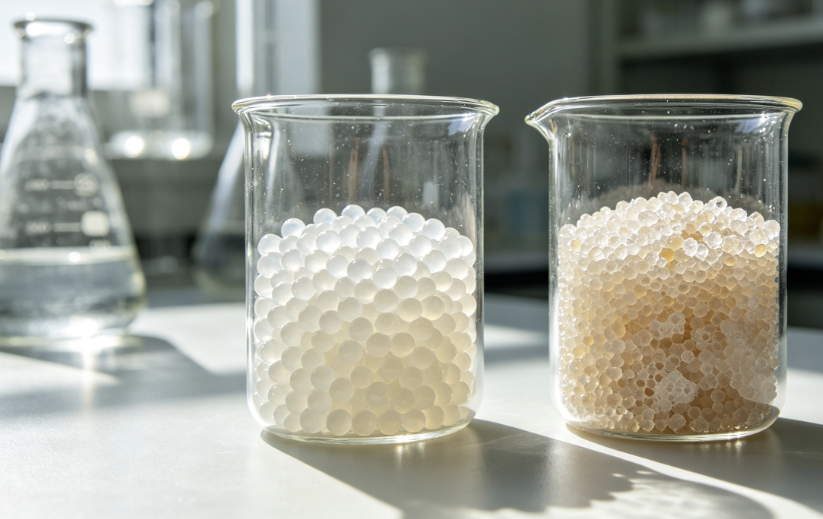
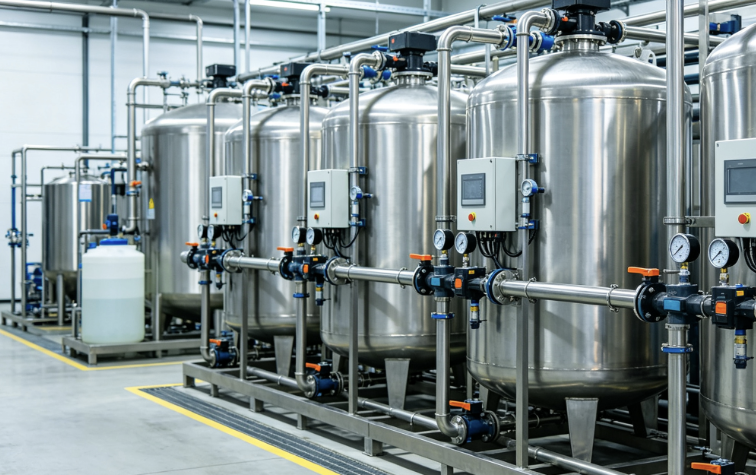
Xian, Shaanxi Sep 28, 2026 (Issuewire.com) - Industrial water softening looks straightforward on a process flow diagram: hard water enters a resin bed, calcium and magnesium exchange for sodium or hydrogen ions, and soft water exits. In practice, plant engineers know the reality is messier. Feedwater hardness swings with the season or the source, regeneration cycles eat into operating budgets faster than expected, and resin that performed well in a pilot test sometimes struggles under real production conditions. A Global Leading Strong Acid Cation Exchange Resin Supplier (https://www.seplite.com/strong-acid-cation-exchange-resin-sac/) approaches these problems not as marketing talking points but as engineering constraints that shape how resin gets designed, tested, and matched to specific water chemistries. When Water Softening Looks Simple on Paper but Fails in the Field The gap between theoretical softening capacity and actual field performance rarely comes down to one dramatic failure. More often, it accumulates from several smaller issues running in parallel: hardness levels that do not match the design basis, regeneration that never quite reaches full efficiency, and operating conditions that push resin outside its comfortable range. Two of these issues surface more consistently than the rest across industrial water treatment operations, and both deserve closer examination before any resin gets specified. Hardness Fluctuation — The Variable Most Softening Systems Are Not Designed For Many softening systems get sized around an average hardness figure, yet source water rarely stays at that average. Seasonal rainfall, groundwater table changes, and shifts in upstream process water all cause calcium and magnesium concentrations to swing higher or lower than the baseline used during system design. When hardness spikes above the design assumption, resin reaches exhaustion earlier than expected, and effluent quality can slip before operators notice the trend. Undersized capacity margins turn what should be a predictable regeneration schedule into a reactive one, with operators chasing breakthrough events rather than managing planned cycles. Regeneration Efficiency — Where Operating Cost Quietly Accumulates Regeneration efficiency rarely causes a dramatic failure, but it steadily erodes operating economics when overlooked. Incomplete regeneration leaves resin with less than its full working capacity, which shortens the next service cycle and forces more frequent regeneration events. Overcompensating with excess regenerant dosing solves the capacity problem temporarily but drives up chemical consumption and wastewater volume from spent regenerant. Resin crosslinkage and physical structure play a direct role here: gel-type resin with standard crosslinkage regenerates differently than macroporous resin, and higher-crosslinkage variants trade some regeneration speed for extended operating life. Matching crosslinkage to the specific regeneration protocol in use, rather than defaulting to a generic product, tends to close much of this efficiency gap. Temperature Extremes and Wide pH Swings — The Overlooked Stress Factors Beyond hardness and regeneration, certain industrial loops push resin through temperature and pH conditions that standard-grade products were never built to handle. Some process water treatment applications run resin beds near 100 to 120 degrees Celsius, conditions under which physical stability becomes as important as exchange capacity. Softening applications spanning a wide pH range, from strongly acidic to strongly alkaline process streams, add another layer of stress that gradually degrades resin structure if the material lacks adequate chemical resistance. These factors rarely appear in a basic specification sheet, yet they determine whether resin holds up over years of continuous operation or requires premature replacement. Iron and Organic Fouling — A Slow but Costly Degradation Path Contamination from iron precipitation and organic fouling represents a slower but equally costly failure mode. Groundwater sources with elevated iron content, along with industrial process water carrying organic residues, gradually coat resin beads and reduce effective exchange capacity even when raw exchange numbers look unchanged on paper. This degradation path often goes unnoticed until softening performance has already declined measurably, making fouling resistance a factor worth evaluating before problems appear rather than after. Matching Resin Structure to the Problem, Not the Application Name Addressing these pain points calls for resin selection based on the specific failure mode at play, not simply the general application category. SEPLITE® strong acid cation resin comes in both gel and macroporous types, with gel resin suited to standard industrial softening and demineralization while macroporous variants handle more demanding dynamic conditions. For applications facing extended service life requirements, higher-crosslinkage gel resin offers longer operating cycles within regenerable mixed bed systems. SEPLITE® Monojet™ DWS350, formulated specifically for water softening with 10 percent DVB crosslinkage, targets hardness removal directly rather than serving as a general-purpose resin adapted to softening duty. Color-indicating resin such as SEPLITE® SC130IND gives operators a visual cue for exhaustion timing, reducing reliance on inline monitoring alone. Each of these variants maps to a specific operational challenge rather than functioning as an interchangeable commodity product. Consistency Behind the Resin — Sunresin's Production and Quality Framework Resin structure alone does not guarantee consistent field performance; production discipline determines whether one batch matches the next. Sunresin (Sunresin New Materials Co. Ltd.) (https://www.seplite.com/sunresin-profile/) maintains production control and quality control systems designed to hold key resin parameters within tight tolerances across manufacturing runs. Sunresin New Materials Co. Ltd. backs its water softening resin lines with certifications including FDA registration, WQA Gold Seal Certificate, REACH compliance, Kosher certification, and Halal certification, giving procurement teams documentation they can verify rather than general assurances. For engineers researching broader softening and demineralization applications across power and industrial sectors, additional technical background (https://www.seplite.com/softening-demineralization-power-industry/) covers related system considerations in more depth. A Diagnostic Checklist Before Selecting a Softening Resin Before specifying a new softening resin, engineers benefit from diagnosing which pain point is actually driving current performance issues rather than assuming a single cause. Does hardness breakthrough correlate with seasonal or source-water changes, pointing toward a capacity margin problem rather than a resin defect? Does regeneration frequency creep upward over time even without a corresponding hardness increase, suggesting incomplete regeneration or fouling? Does the application involve elevated temperature or wide pH swings that a standard-grade resin was never rated to withstand? Answering these questions honestly narrows resin selection considerably and avoids paying for capacity or durability the application does not actually need. Working With a Long-Term Water Softening Partner Selecting the right resin solves only part of the softening equation; ongoing technical support for regeneration protocol adjustments, water chemistry changes, and system troubleshooting often matters just as much over a multi-year service life. Sunresin continues to develop strong acid cation resin technology for industrial softening and demineralization applications, supported by production facilities and application engineering experience across power, chemical, and general industrial water treatment sectors. Further technical specifications, resin selection guidance, and project consultation are available at https://www.seplite.com/.
Media Contact
Sunresin *****@sunresin.com http://www.seplite.com/