Dongguan, Guangdong Jun 24, 2026 (Issuewire.com) - The rapid evolution in portable electronics has created a fundamental shift to the hardware design philosophy. Engineers no long build devices around standard parts. Instead, they place a high priority on ergonomics, aesthetic appeal and extreme miniaturization. This trend towards bespoke hardware creates an important bottleneck for traditional solutions. Off-the shelf power sources force designers to compromise internal volume or device function. PKCell, a China Top Special Lithium Button Cell Battery Manufacturer, has recognized this challenge and is able to bridge the gap between innovative design & electrochemical reality. The manufacturer offers specialized voltages, non-standard formfactors, and the flexibility needed for the next generation in smart hardware. This technical agility ensures power sources are integrated into the device architecture and not just an afterthought.
The Architecture Of Customization: Solving The Space Energy Paradox
Modern electronic enclosures feature increasingly curved surfaces, ultra thin profiles, and geometries with zero tolerance. In these environments, each cubic millimeter must have a purpose. Standard button cells are reliable, but their rigid cylindrical dimensions often leave a lot of "dead" space. PKCell (Shenzhen Pkcell Battery Co. Ltd.) has developed "Form Factor Innovation" to overcome this problem.
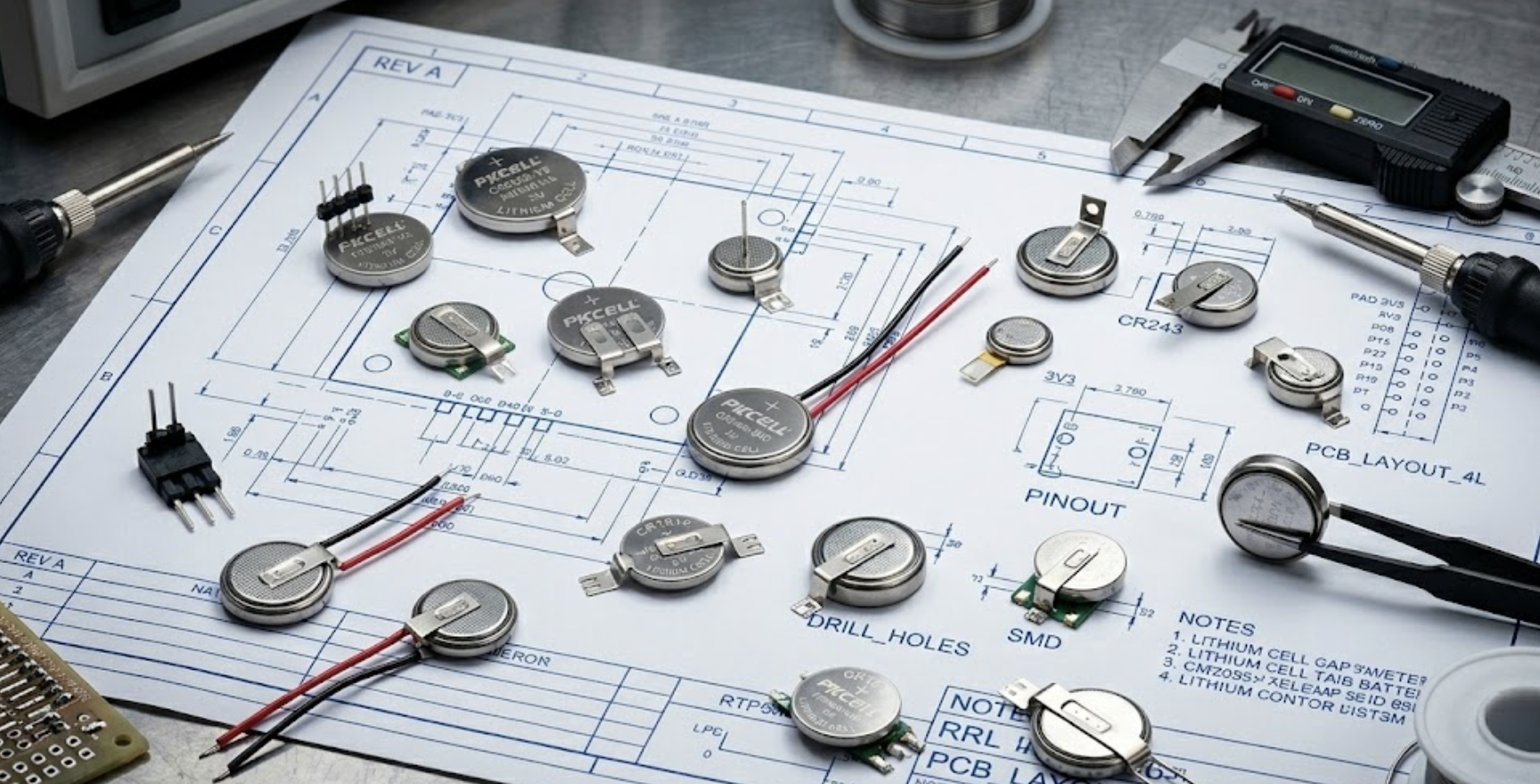
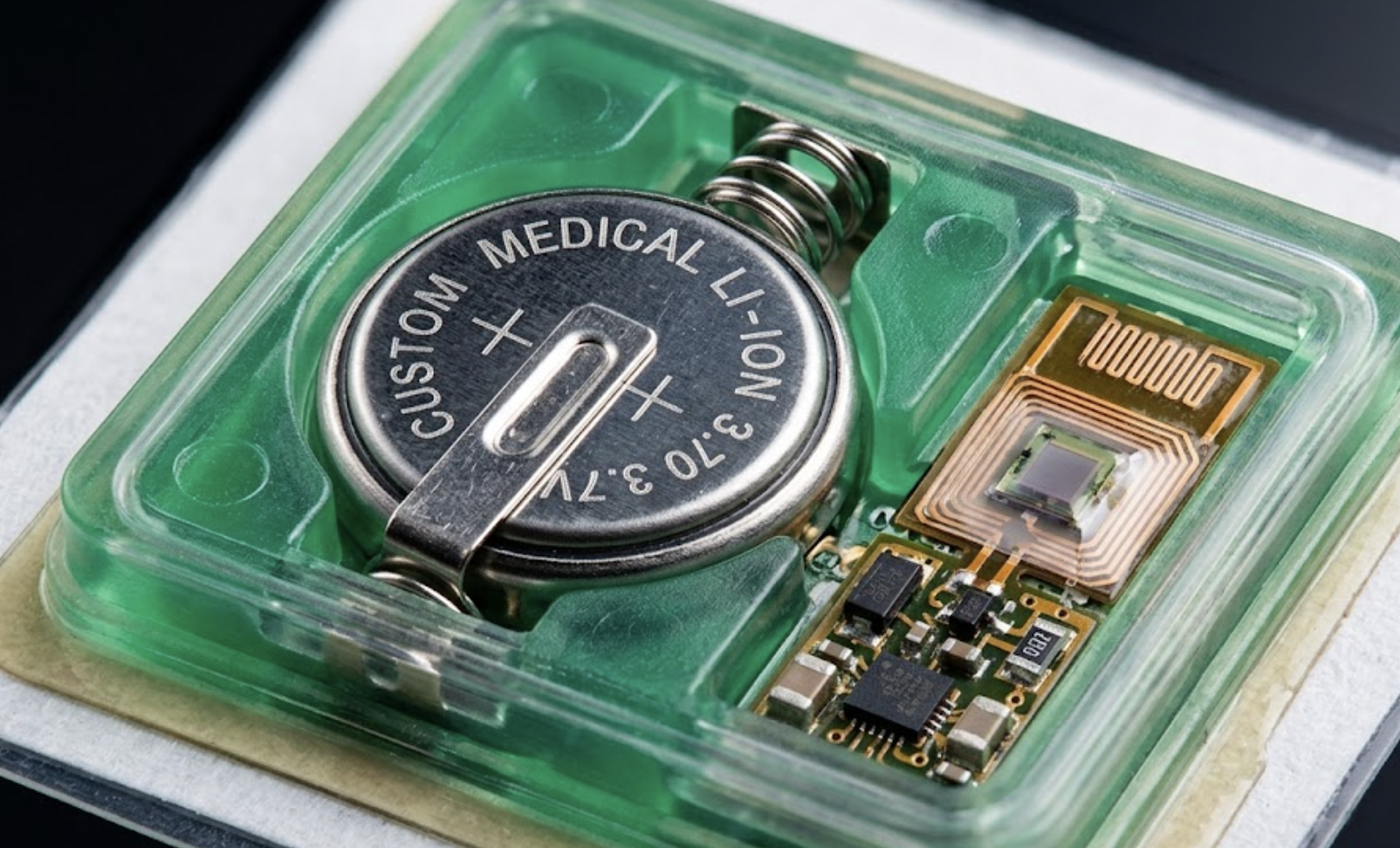
This customization is more than simply selecting a different thickness or diameter. The manufacturer uses advanced CNC tab and pinning welding techniques to integrate the cells directly into specialized assembly. Some IoT sensors, for example, require offset pins or special soldering tabs in order to sit flush with a multi-layered PCBA. The manufacturer can eliminate the need for bulky traditional battery holders by providing these integrated modules. This reduces the thickness of the final product, and increases structural integrity in the event of vibration or mechanical shock. Hardware designers can therefore achieve thinner profiles without sacrificing energy capacity.
Electrochemistry On Demand: Engineering Custom Voltages and Discharge Profiles
Standard lithium button batteries typically operate at nominal voltages of 3.0V or3.6V. To maintain sensor accuracy, medical sensors with high precision and industrial monitors require specialized voltage plateaus. If a battery voltage drops too quickly, it can cause false alarms and data corruption in sensitive electronic devices. PKCell offers "Electrochemistry On Demand" to prevent these issues by optimizing chemical formulations within the battery for specific load requirements.
The engineering team adjusts electrolyte compositions to handle high-pulse requirements from wireless protocols such as NB-IoT and LoRaWAN. These communication standards demand sudden current spikes, which can cause a "voltage drop" in a standard cell. The manufacturer reduces internal resistance by using specialized cathode material. This ensures that the voltage remains constant throughout the pulse duration. The company also offers customized solutions for extreme conditions. Standard cells can fail in extreme temperatures, but these specialized variants are still functional from -40 to +85 degrees Celsius. These cells are ideal for outdoor infrastructure, industrial asset tracking and other applications where thermal stability is required.
The CAD to Prototype Workflow: Accelerating R&D Cycle
Speed is a key metric in the global hardware development landscape. Engineering teams cannot afford to wait long lead times on custom components during prototyping. Shenzhen Pkcell Battery Co., Ltd. addresses this need with a streamlined 'CAD-to-Prototype' workflow. This process begins with a collaborative analysis of PCB blueprints, and enclosure models.
By translating these digital designs to optimized battery layouts, manufacturers reduce the time between conceptual design and functional testing. Rapid prototyping allows multiple iterations on pin configurations or wire lead integrations within a few days. This collaborative approach transforms a manufacturer from a simple supplier into an extension of a client's internal R&D team. Designers can identify integration issues early on in the development cycle when they test bespoke modules. This synergy reduces the time to market for innovative hardware.
Flexible Automation: Ensuring Consistency In Large-Scale Custom Orders
A manufacturing infrastructure capable of reproducing high-precision replicas is required to make the transition from a prototype into a mass-produced “Special” battery. Many suppliers struggle with maintaining quality when moving away standard, high-volume designs. The 28,000-square meter facility of PKCell, Shenzhen Pkcell Battery Co. Ltd., uses 20 fully automated production line designed for flexible batch processing.
Automation ensures that each custom-welded tab and non-standard connector adheres exactly to the same tolerances. Real-time assembly is monitored by high-speed cameras, automated optical inspection systems (AOI), and other monitoring tools. These systems ensure that the hermetic sealing of the cell is not compromised during customization. They also verify the integrity and quality of laser welds. Each batch is also subjected to rigorous vacuum leak tests and electrical performance checks, supported by over 100 internal quality control processes. These processes govern each stage, from raw material intake through to final dispatch. This manufacturing rigor ensures that large-scale custom order maintain the same reliability of standardized industrial cells.
Global Compliance For Specialized Applications: a De-Risking Strategy
The deployment of non-standard battery packs on international markets is fraught with regulatory and safety challenges. Before allowing transportation, many global carriers and customs require specific documentation. This documentation is crucial for "Special" forms factors to ensure safety in shipping and handling.
As a China Top Special Lithium Button-Cell Battery Manufacturer, the company helps international partners navigate this compliance landscape. All specialized products are tested to meet UN38.3, UL and CE standards. These certifications demonstrate that the custom packs are stable under pressure, thermal shock, and vibration. The manufacturer also uses Low Self-Discharge technology (LSD) to ensure that even specialized forms factors maintain their energy integrity for long storage periods. The company offers a comprehensive derisking strategy that allows global OEMs export their unique hardware in full regulatory confidence. This transparency simplifies logistics and protects brand reputation.
Designing Without Limits: The Future Of Collaborative Energy
Hardware innovation flourishes when designers are liberated from the limitations of generic parts. As electronics continue to integrate into clothing, industrial tools, and medical implants, the demand for "Application-Specific Energy" will only increase. Customization is the ultimate modern design enabler, allowing more natural and efficient interactions between humans and technology.
PKCell is committed to being an invisible partner in the creation of these unique electronic form-factors. The company's ability to combine advanced electrochemical research and flexible manufacturing helps it turn ambitious design ideas into reliable commercial products. The future of the battery market is defined by the synergy between precision engineering and a customer-focused service model. The path to superior device performance for innovative hardware designers and procurement managers begins with a specialized strategy. To explore bespoke energy solutions, view full product specifications, or request a technical consultation, visit the official portal at https://www.pkcellpower.com/.
Media Contact
Shenzhen Pkcell Battery Co., Ltd. *****@pkcellpower.com 902, Tower B, Hongrongyuan North Station Center, North Station Community, Minzhi Street, Longhua District, Shenzhen, China https://www.pkcellpower.com/