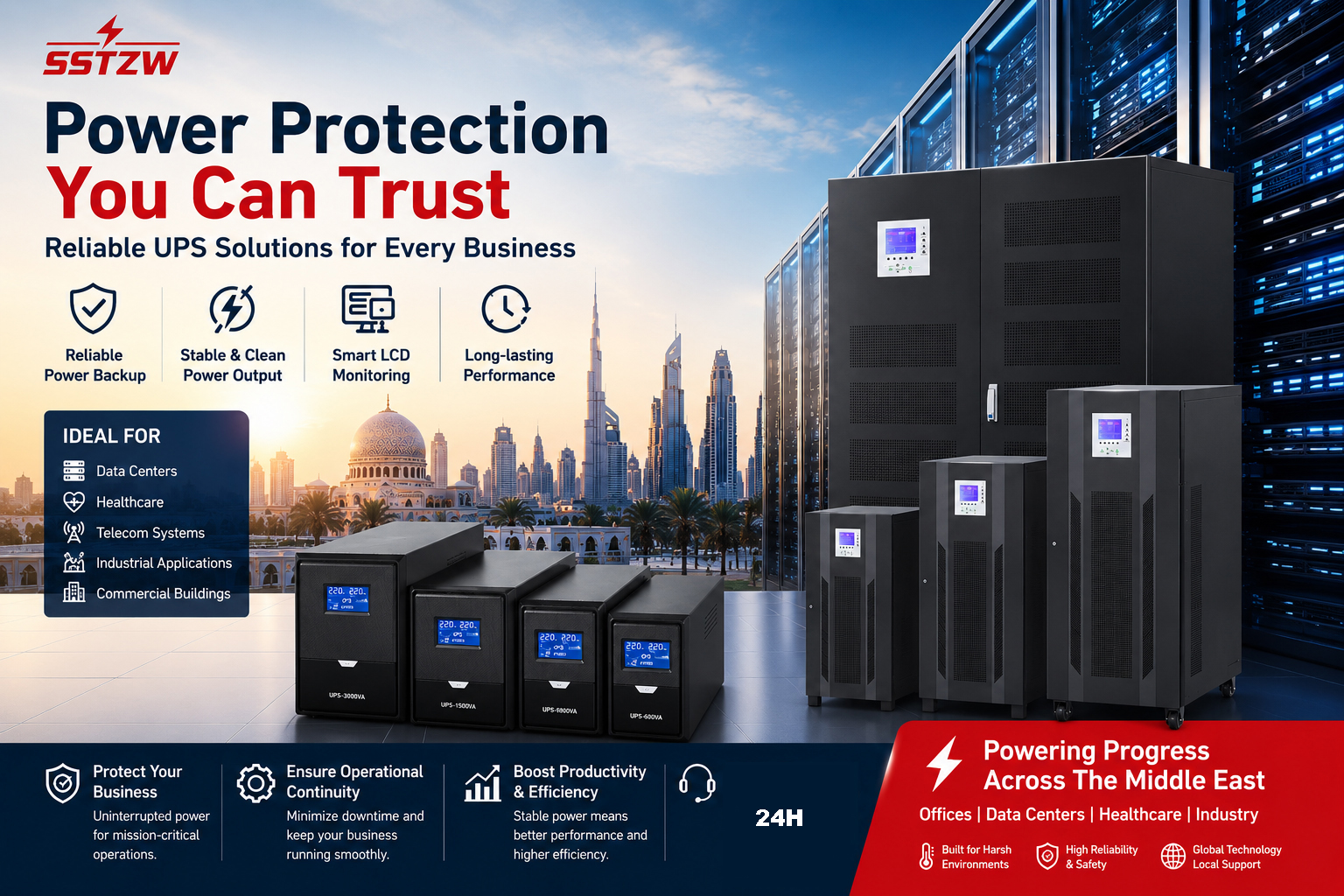
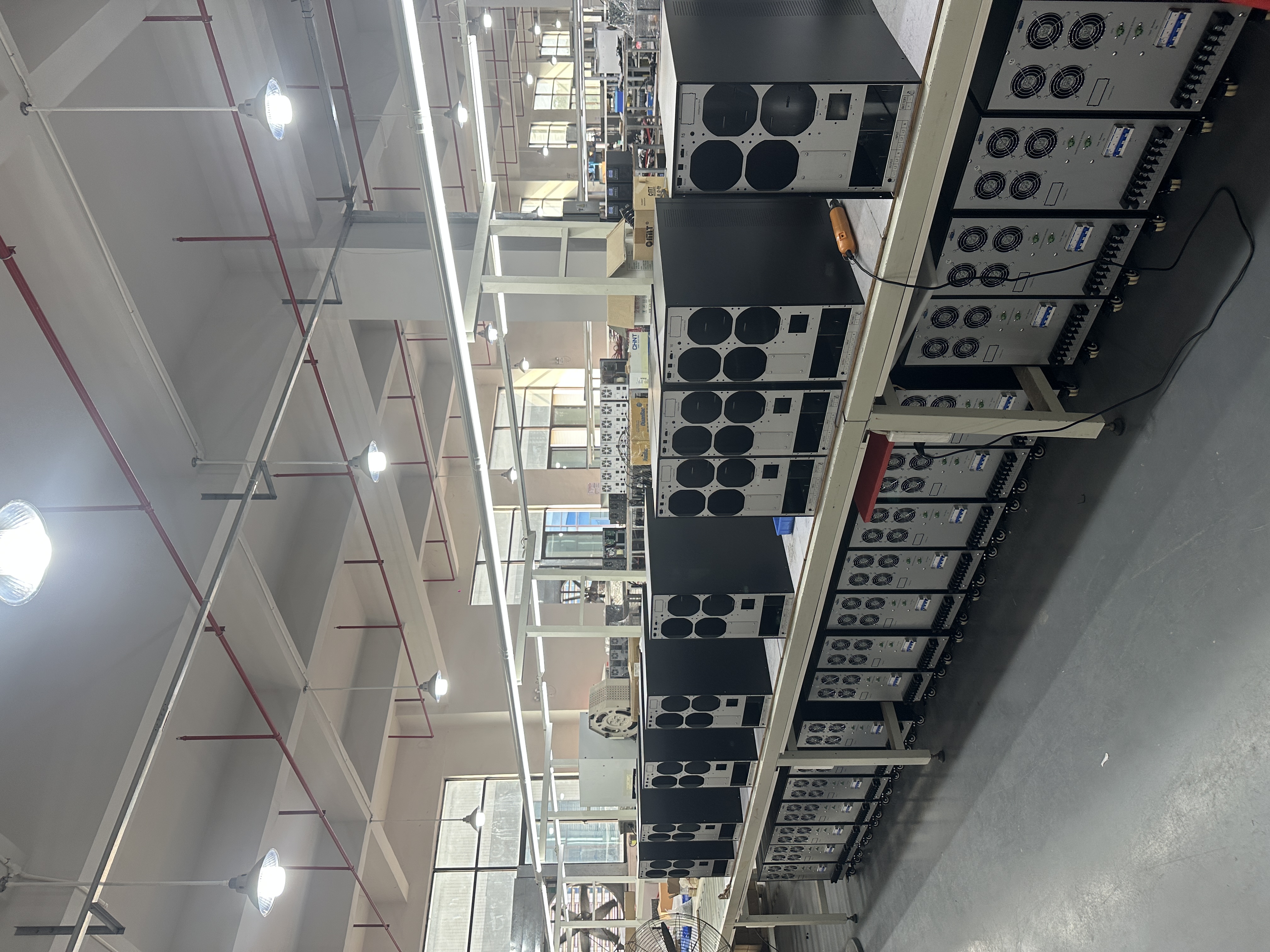
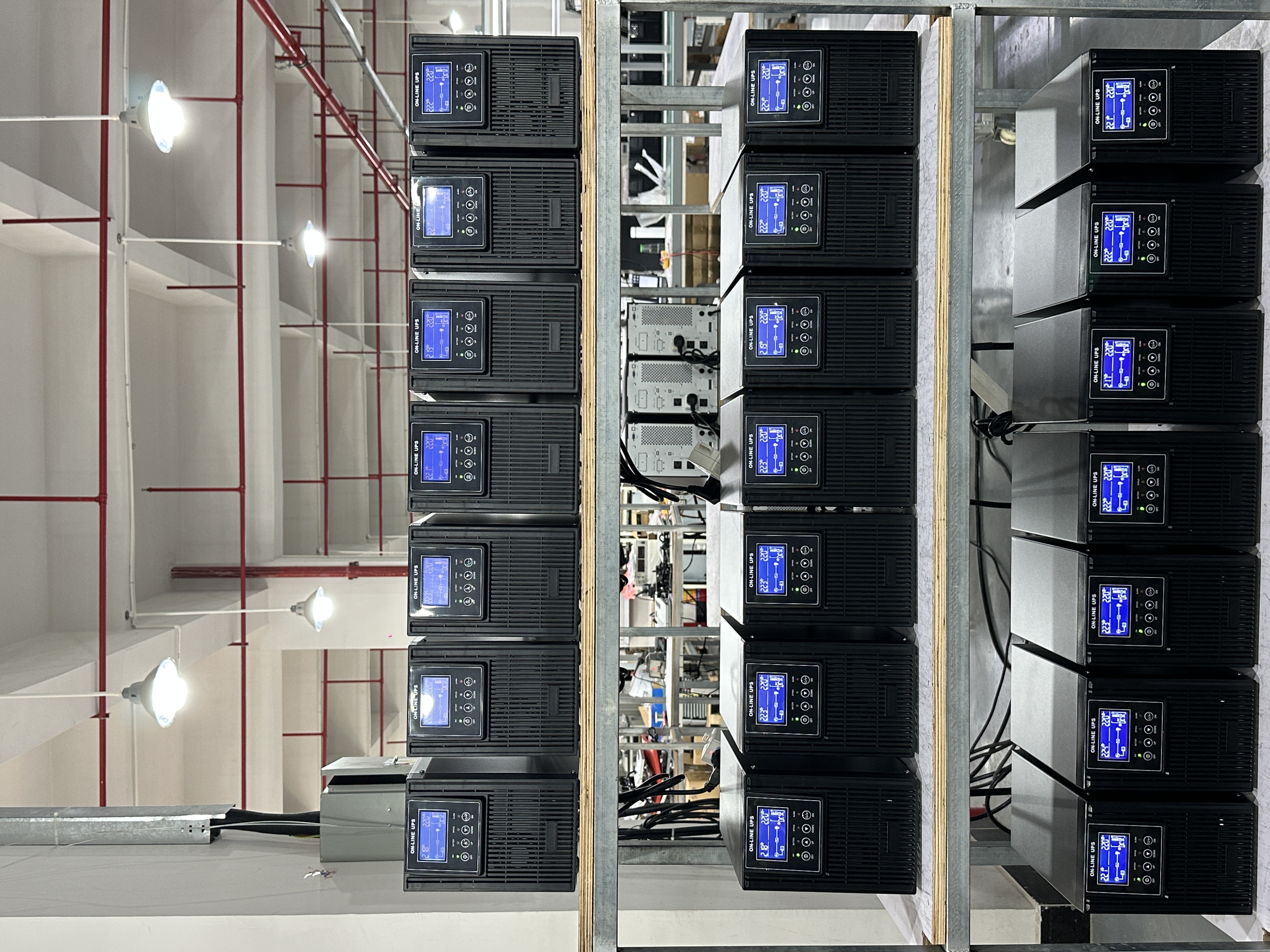
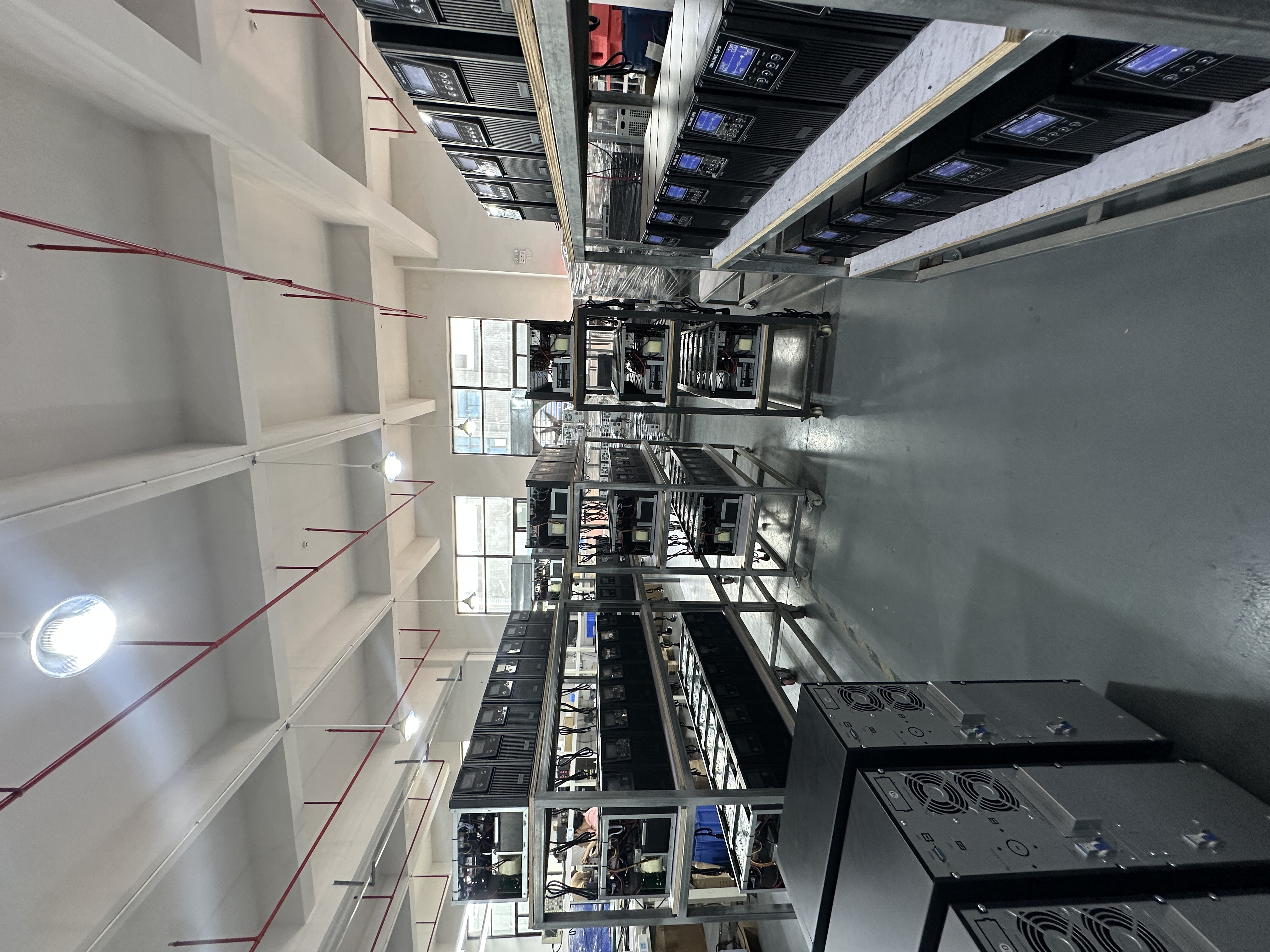
Shenzhen, Guangdong Aug 7, 2026 (Issuewire.com) - Medical equipment, data centers, and continuous production lines share one intolerance: they cannot afford a power gap or an unstable output. For the buyers who specify backup power for these loads, choosing a Reliable Online UPS Solution has become less about a single nameplate rating and more about how well a system matches the protected load, the required backup time, the site input voltage range, the output accuracy, the phase configuration, and the service conditions. Shenzhen SST Power approaches that comparison from the customer power environment first. Its online UPS lineup spans high-frequency transformer-less double-conversion units, low-frequency transformer-based double-conversion units, and modular UPS, and the company pairs each option with pre-sales consultation, customized configuration, and long-term quality tracking. Stability, in other words, is a verifiable result rather than an adjective.
How Buyers Define a Reliable Online UPS Solution
The first step in any credible comparison is not price or model number. It is defining the equipment capacity, the backup time requirements, and the site input voltage range. The protected load sets the capacity baseline. The business continuity goal sets the required backup time. The condition of the local grid sets the input range the system must tolerate. Only after those three points form the project boundary do rated power, phase, and battery configuration become genuinely comparable. The company selection guidance lists exactly these factors, which reframes a reliable online UPS solution as something concrete: the translation of load demand, input conditions, and backup targets into a configuration the buyer can confirm, not a vague promise of never losing power.
Compare Topology, Phase, and Capacity Before Model Selection
A useful comparison separates the architecture paths before it narrows to one product. The HHF-11 is a high-frequency transformer-less double-conversion online UPS rated 1 to 10 kVA, single phase, which makes it a sensible baseline for single-phase projects. The HLF-33 and RLF-33 are low-frequency transformer-based double-conversion online UPS units spanning 10 to 600 kVA, three-phase, a capacity path suited to industrial online UPS and centralized supply projects. The ZWM 30U and 42U modular UPS cover 60 to 300 kW, three-phase, so expansion planning becomes part of model evaluation rather than an afterthought. Named model, topology, phase, and capacity range together form a matrix a buyer can check line by line.
Measure Grid Adaptability and Output Stability with Model-Level Data
Input voltage range shows how far a UPS can adapt to real site conditions, while output accuracy shows how steadily it holds the supply the protected equipment actually sees. At 50% load, the HHF-11 lists a 110 to 300 VAC input range, a customizable 220 VAC output, and output accuracy within 1%. The HLF-33 and RLF-33 list a 285 to 475 VAC input range, a customizable 380 VAC output, and the same 1% accuracy, setting a shared benchmark for three-phase low-frequency comparison. The ZWM units list a 305 to 478 VAC input range, a customizable 380 VAC output, and 1% accuracy, with capacity, input window, and expansion method meant to be checked together in one configuration table. Every figure should be read against a specific model and load condition rather than stretched into a whole-series promise.
Treat Backup Time as a Configuration Input, not a Nameplate Assumption
Backup time cannot be inferred from a kVA or kW rating. Equipment capacity defines the power requirement, backup time defines the energy requirement, and the final battery count, capacity, and cabinet arrangement should be confirmed alongside the rest of the project configuration. In one hospital application, a 100 kVA UPS was matched with 32 batteries of 100 Ah to back up medical equipment, a reminder that the UPS and its battery bank need to be reviewed as a single system. Case parameters like these demonstrate the configuration method; they do not replace a new project load schedule, runtime target, and final technical documents.
Use Mission-Critical Applications to Test the Comparison Logic
Real applications test whether the comparison logic holds. The hospital deployment above ties capacity, backup time, and protected equipment into one system match. In Malaysia, a batch application connected industrial-frequency UPS with a data center continuous-supply requirement and involved a bypass isolation regulator cabinet as part of the system design. Across medical equipment and data center settings alike, the purchasing judgment returns to the continuous load, the system architecture, and the maintenance conditions rather than to isolated parameters. Cases confirm how a product class enters an actual project, yet each new project still needs its own confirmation of load, input conditions, backup target, and service plan.
Compare Consultation, Customization, and Lifecycle Support
Long-term stability depends on more than device parameters; it depends on whether pre-sales requirement capture, customized configuration, post-delivery quality tracking, and fault response form a continuous chain. Shenzhen SST Power provides power application consultation based on the user power environment, bringing input conditions, load scale, and backup targets into one technical discussion before selection. The HHF-11, HLF-33, RLF-33, and ZWM all list customizable voltage, leaving room to fit different input and output conditions. After delivery, long-term quality tracking together with rapid repair and maintenance forms the lifecycle support layer, and the company service guidance lists phone support, video support, on-site repairs, and warranty services. As a manufacturer with its own research and development, production, sales, and technical support, Shenzhen SST Power Co., Ltd. sells to more than 40 countries and regions, so a sound comparison confirms the specific support available for a given project rather than settling for generic service language.
Taken together, the online UPS comparison framework unifies load and backup targets, topology and phase, capacity and scalability, input range and output accuracy, application records, and lifecycle support into a single purchasing judgment. The company promise is straightforward: service first, customer first, starting from each customer's power environment and creating value through customized consultation, quality tracking, and technical support. Buyers can visit the Shenzhen SST Power contact page and submit their protected equipment, load capacity, input voltage range, and backup time requirements to open a project-specific online UPS configuration discussion.
Media Contact
Shenzhen SST Power Co.,Ltd. *****@sstpowerltd.com https://www.sstpowerltd.com/