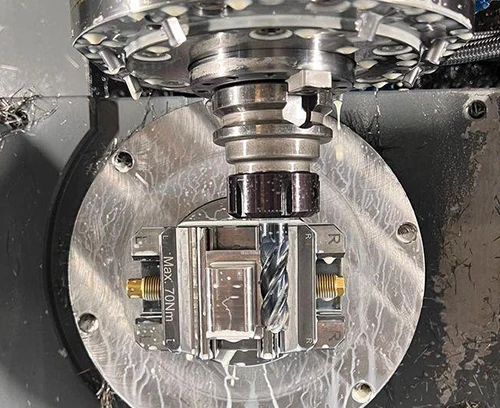
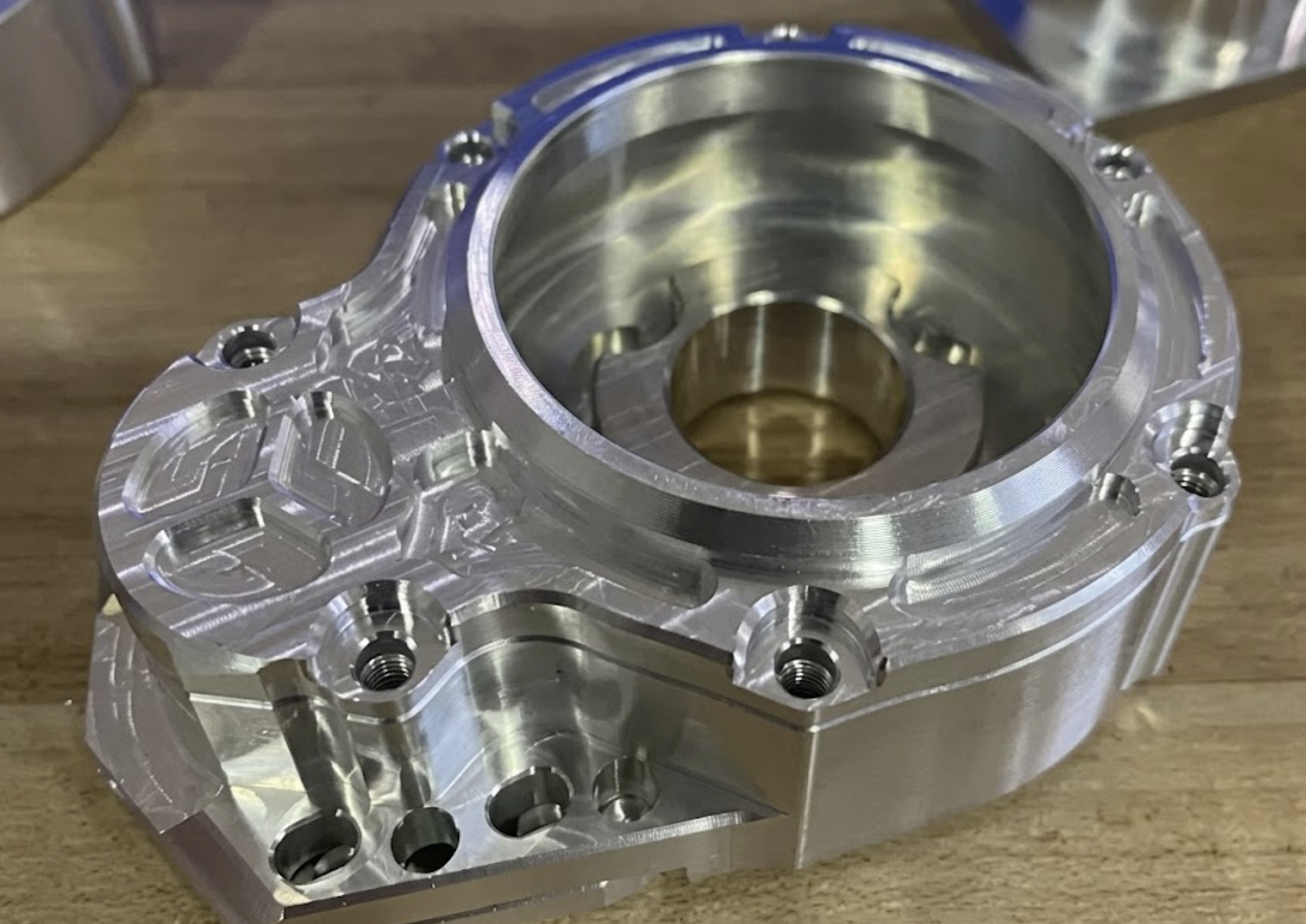
Dongguan, Guangdong Jun 24, 2026 (Issuewire.com) - Precision manufacturing is entering a decisive phase. Engineering teams across aerospace, automotive, medical, and industrial sectors are raising their expectations — not just for dimensional accuracy, but for the process intelligence that sustains that accuracy across full production volumes. Against this shift, the role of a Professional 5 Axis CNC Machining Solutions Provider has expanded well beyond equipment ownership. In 2026, the manufacturers that command genuine competitive relevance combine advanced machine infrastructure with deformation control expertise, computational toolpath intelligence, and automation-integrated production systems. Understanding where these capabilities are heading shapes smarter sourcing decisions.
Five-Axis Machining in 2026 — From Advanced Option to Manufacturing Default
Five-axis machining once occupied a narrow tier of specialized applications. Turbine components, orthopedic implants, and defense hardware defined its boundaries. That boundary has dissolved. Today, the technology serves automotive structural parts, industrial robot frames, consumer electronics tooling, and precision mold cavities — components that used to route through multi-axis milling sequences or accept looser geometric tolerances as a cost compromise.
The shift reflects a broader industry logic. As part complexity increases and tolerance requirements tighten, the cost of working around five-axis capability — through additional setups, secondary operations, or tolerance stack-up management — consistently exceeds the cost of using it directly. In 2026, the relevant question is no longer whether five-axis machining applies. It is whether the manufacturing partner behind it has the process depth to deliver verified accuracy at production scale.
Single-Setup Geometry Mastery — Why Complex Parts No Longer Accept Multiple Fixtures
Every re-clamping operation introduces positional uncertainty. For simple rectangular parts, that uncertainty stays manageable. For components with spatially twisted surfaces, compound curves, or features requiring tight geometric relationships across multiple faces, each additional setup multiplies dimensional risk in ways that accumulate beyond any individual tolerance budget.
Aerospace integrated blade discs illustrate this challenge clearly. Blades with wall thicknesses of 2 to 3 mm, complex free-form surface profiles, and minimum inter-blade spacing of 12.5 mm represent exactly the geometry class that exposes multi-setup limitations. Five-axis simultaneous interpolation maintains continuous tool-axis control relative to the workpiece surface throughout the cut. This eliminates the positional discontinuities that 3-axis or 3+2 positioning strategies introduce at each re-clamping point. The result is not merely faster production — it is geometrically more coherent output that reflects design intent more faithfully.
ChengYang hardware (DONGGUAN CHENGYANG HARDWARE CO.,LTD), a precision machining manufacturer based in Dongguan, Guangdong, operates five-axis milling centers capable of handling part envelopes up to 2000mm x 1500mm x 800mm, achieving dimensional tolerances down to ±0.01mm. For parts where datum integrity determines functional performance, that combination of work volume and precision makes single-setup geometry mastery an operational reality rather than a theoretical claim.
Real-Time Deformation Compensation — Closing the Gap Between Specification and Reality
Machine specification defines the upper boundary of achievable accuracy. Process physics determines whether that boundary holds during actual cutting. For thin-walled and cantilevered features, cutting forces, thermal gradients, and progressive stiffness reduction as material is removed all generate elastic deformation that diverges from nominal toolpath positions. On titanium alloy blades, this deformation can reach 0.1 to 0.3 mm — far exceeding the ±0.01mm accuracy targets that precision applications demand.
Leading five-axis manufacturers now address this through a structured three-layer control architecture. The first layer uses finite element simulation to predict deformation distribution across the part before cutting begins — mapping where deflection will concentrate and quantifying its expected magnitude at each machining position. The second layer applies active suppression during the cut itself: reverse-segmented processing sequences that machine from rigid zones toward cantilevered zones, combined with auxiliary support technologies that constrain low-stiffness regions during material removal. The third layer applies iterative post-process compensation, adjusting toolpaths through reverse geometric model reconstruction to pre-correct for predicted deformation in subsequent passes.
The validated outcomes from this architecture are significant. Maximum blade deformation error reduces from approximately 95 micrometers under conventional machining to below 5 micrometers. All 47 blades in a production batch pass inspection — compared to 12 failures in a control group using traditional methods. Deformation error reduction rates exceed 95%. ChengYang hardware applies this level of process discipline to complex five-axis projects, treating deformation control not as an exceptional measure but as standard engineering practice for geometrically demanding components.
AI-Assisted Toolpath Optimization — Converting Computational Intelligence Into Measurable Output
Conventional CAM toolpath generation prioritizes collision avoidance and basic material removal logic. AI-assisted toolpath systems operate at a different analytical level. They process part geometry, material behavior, machine dynamic response, and cutting force models simultaneously — generating paths that minimize tool engagement variation, reduce peak load events, avoid chatter-prone cutting conditions, and compress cycle time without degrading surface finish.
For complex five-axis components, the performance gap between conventionally programmed and computationally optimized toolpaths translates into tangible production advantages. Cycle time reductions of 15 to 30 percent are achievable on geometrically complex parts. Surface finish consistency improves across batch production because load fluctuations that cause microscale surface variation get pre-empted rather than corrected after the fact. Additionally, AI path optimization reduces programming dependency on individual expertise for each new geometry — accelerating the transition from customer file submission to first-article production.
DONGGUAN CHENGYANG HARDWARE CO.,LTD integrates this programming intelligence into its production workflow. Standard machined orders ship in as few as three days. On geometrically complex five-axis components, that lead time benchmark reflects not just machine throughput but the efficiency of the upstream programming and process planning that prepares each job for production.
Automation Integration — Redefining the Economics of Unattended Five-Axis Production
Historically, five-axis machining centers required close operator supervision throughout production runs. Setup complexity and the difficulty of detecting mid-process deviations kept human attention tightly bound to the machine. Automation is dismantling that constraint. Robotic loading systems, in-spindle probing, adaptive feed control, and tool wear monitoring now enable extended unattended production windows — shifting the economic model of complex part manufacturing toward higher utilization rates and lower per-part overhead.
For international customers sourcing precision components from China, this shift carries a specific practical benefit. Automation-integrated five-axis production delivers greater quality consistency across production shifts and reduces sensitivity to labor availability fluctuations. ChengYang hardware supports on-demand manufacturing with no minimum order requirements — scaling from individual prototypes to full production volumes within the same facility framework and quality management system. That flexibility, enabled by automation-integrated production scheduling, allows demand variability to be absorbed without either lead time penalties or quality compromises.
Selecting a Five-Axis Partner in 2026 — Process Depth Over Equipment Inventory
The number of suppliers listing five-axis equipment has grown considerably. Meanwhile, the gap between suppliers with genuine process depth and those with underutilized machines has widened at a similar pace. Equipment acquisition is straightforward. Deformation control expertise, validated compensation methodology, and the engineering judgment to match tooling strategy to specific geometry types take considerably longer to develop.
Three verification questions distinguish mature five-axis providers from equipment owners. First, can the supplier demonstrate validated deformation control outcomes on parts with comparable geometry, wall thickness, and material characteristics — with documented measurement data rather than verbal assurance? Second, does the supplier maintain in-house surface treatment capability that preserves dimensional integrity through post-machining processes? ChengYang hardware supports over eleven distinct surface finishing processes — including anodizing, electroplating, powder coating, passivation, and black oxide — within the same facility and quality management framework that governs machining. Third, does the supplier provide CMM-generated dimensional inspection reports as standard documentation rather than as an optional service?
In 2026, manufacturers who extract the greatest value from five-axis technology are those who have built the process knowledge, compensation systems, and quality infrastructure to make the machines consistently perform at their engineering potential — not simply those who have purchased them.
For detailed information on five-axis CNC machining capabilities and precision manufacturing services, visit https://www.c-ycnc.com/.
Media Contact
DONGGUAN CHENGYANG HARDWARE CO.,LTD *****@c-ycnc.com Building Nr.10, Hesen Industrial Huailin Road #131,Humen Town,Dongguan City,Guangdong Province,China https://www.c-ycnc.com/