Shucheng, Anhui Jul 8, 2026 (Issuewire.com) - Chlor-alkali producers worldwide face a familiar squeeze. Energy costs remain elevated, and ion exchange membrane prices have climbed steadily across global supply chains. Against this backdrop, many plant operators direct their focus toward sourcing strategy — searching for a China Best Chlor-Alkali Membrane Cell Supplier in the expectation that domestic procurement alone delivers meaningful relief. In reality, the most consequential cost lever rarely sits inside the membrane procurement line. It sits inside the engineering decisions that determine how long each membrane survives in active production. Plants that understand this distinction operate with structurally lower total costs — and an entirely different relationship with membrane replacement.
The Membrane Cost Illusion — Why Procurement Decisions Miss the Bigger Number
Membrane material expenditure per ton of caustic soda represents only a fraction of total membrane-related costs. Each premature replacement event carries a cluster of compounding expenses: production downtime, caustic soda output interruption, labor for cell disassembly and reassembly, and a full re-commissioning period. These indirect costs frequently exceed the membrane price itself. As a result, operations that extend membrane replacement intervals by even a few months gain disproportionate cost advantages over those simply shopping for lower unit prices. The productive question, therefore, is not how to source membranes more cheaply. It is how to make each membrane last significantly longer — and what engineering conditions determine that outcome.
Loss Layer 1 — Brine Purity: The Upstream Variable Most Plants Underestimate
Brine purification quality shapes membrane service life more directly than almost any other operating variable. Calcium, magnesium, and sulfate ions above threshold concentrations initiate scaling across the membrane surface. This scaling progressively raises electrical resistance and generates localized mechanical stress at the membrane structure. Secondary brine purification — typically chelating resin treatment combined with continuous hardness ion monitoring — is not a supplementary quality measure. It functions as a direct economic control on membrane longevity. Operations running inadequate feedwater quality routinely see service intervals shorten by 30 to 50 percent compared to plants holding tight purification standards. Rubri (Hefei Sinopower Technologies Co., Ltd.) integrates brine system design within its chlor-alkali plant supply scope, treating upstream purification as a load-bearing element of membrane economics rather than a peripheral utility decision.
Loss Layer 2 — Electrode Coating Degradation and the Current Efficiency Spiral
Electrode coating performance governs current efficiency directly. As dimensionally stable anode and cathode coatings wear over time, cell overpotential rises. The electrolyzer then draws more current to sustain output targets. That additional current, in turn, accelerates further coating wear — creating a self-reinforcing degradation cycle. This spiral rarely manifests as a single dramatic event. Instead, it appears as a slow quarterly drift in energy consumption and a gradual climb in per-cell voltage readings. Effective electrode coating specification — covering substrate preparation quality, coating composition, and thickness uniformity — determines both the starting efficiency baseline and the pace of subsequent decline. Rubri addresses electrode coating longevity as a core design parameter within its ion exchange membrane electrolyzer systems for the chlor-alkali industry, not as a maintenance variable managed reactively after installation.
Loss Layer 3 — Membrane Degradation: Chemical Attack vs. Mechanical Stress
Ion exchange membranes fail through two distinct pathways, and understanding which mechanism dominates in a given plant context shapes the appropriate intervention. Chemical degradation attacks the perfluorinated polymer backbone progressively — driven by free chlorine in the anolyte, off-specification caustic concentration on the catholyte side, or temperature excursions beyond validated operating ranges. Mechanical failure, by contrast, stems from pressure differentials across the membrane surface, inadequate electrode gap management, or physical stress introduced during shutdown and restart cycles. In practice, both mechanisms frequently operate simultaneously. Each one accelerates the other. Controlling chemical degradation requires strict caustic concentration management and temperature discipline across the full cell stack. Controlling mechanical degradation demands precise differential pressure monitoring and careful assembly practice. Neither condition responds to membrane material upgrades alone — both require system-level engineering discipline as the primary line of defense.
Loss Layer 4 — System Integration Failures That Amplify Every Loss
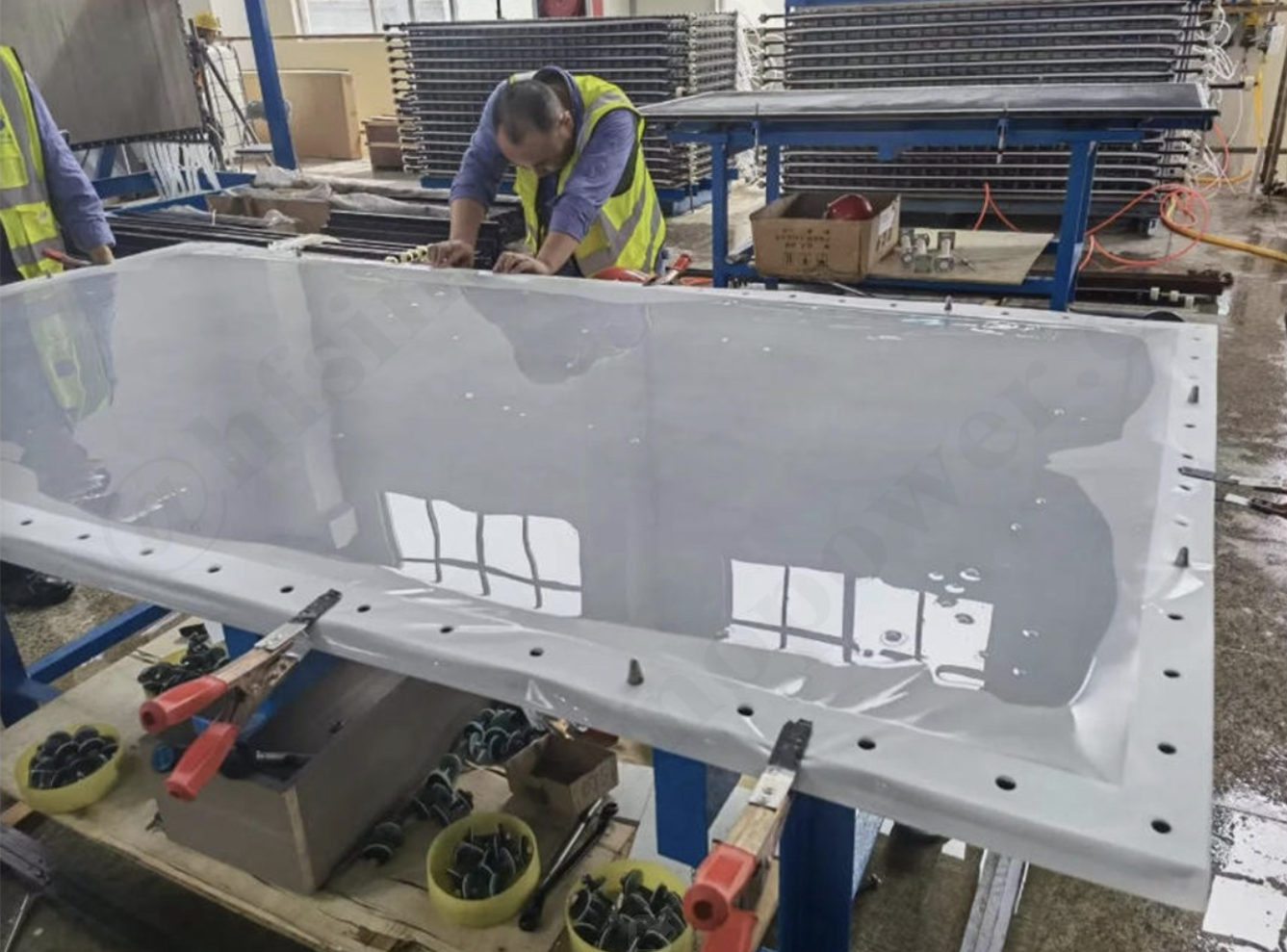
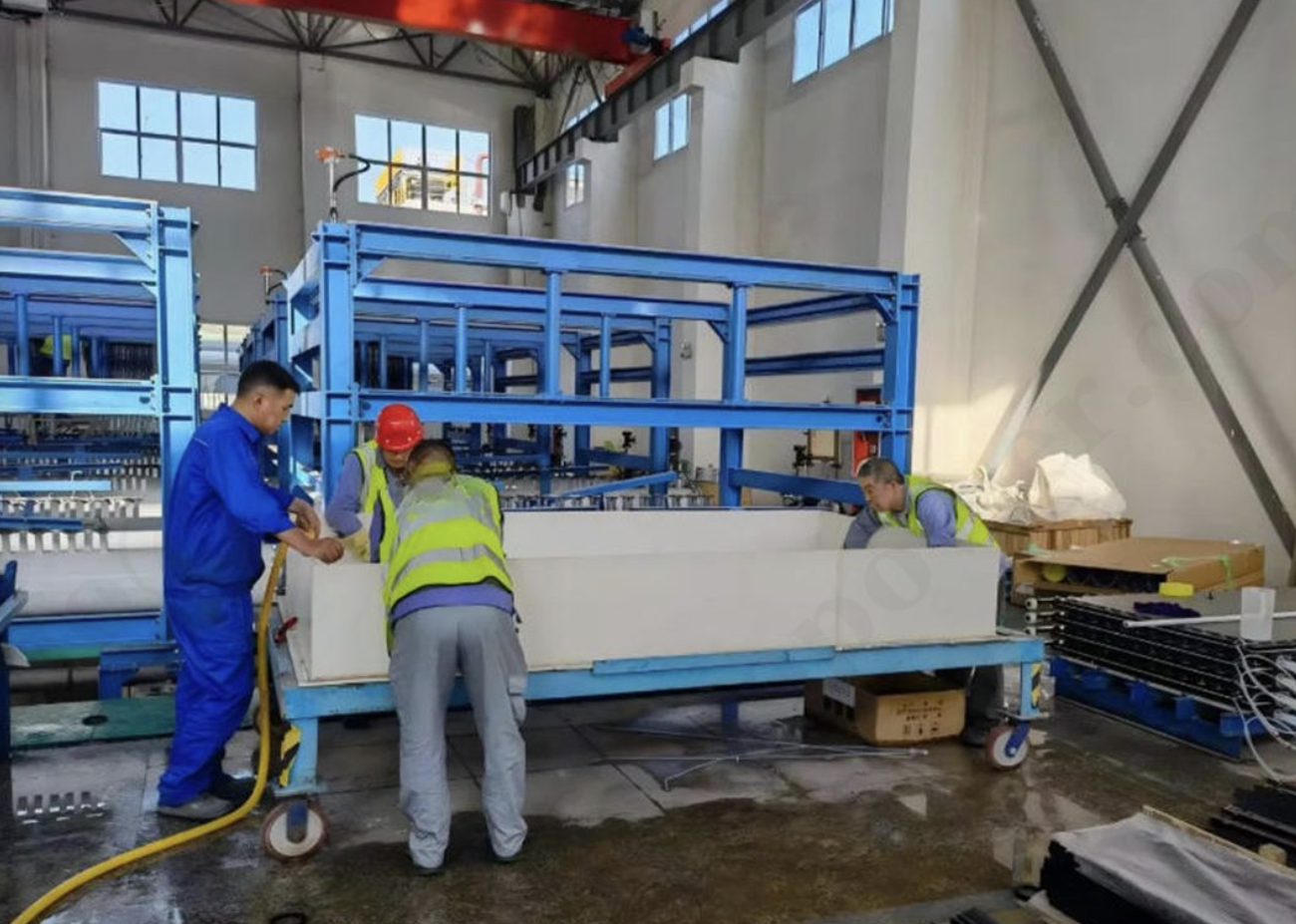
Even well-specified membranes and electrodes consistently underperform inside poorly integrated systems. Temperature uniformity across the cell stack, caustic soda concentration at the catholyte outlet, gas management behavior within the electrolyzer body, and current distribution across the bipolar plate surface all interact with membrane and electrode performance simultaneously. Poor integration creates localized stress concentrations — thermal hot spots, electrochemical concentration gradients, uneven current pathways — that accelerate degradation at discrete points rather than uniformly across the active membrane area. This pattern explains why component-level replacements so often disappoint operators. A new membrane installed into a legacy system with inadequate integration inherits identical degradation conditions to its predecessor. Hefei Sinopower Technologies Co., Ltd. addresses this dynamic through a complete system overhaul approach to chlor-alkali electrolysis modernization — one that treats cell hardware, process control architecture, and system integration as a unified engineering scope rather than separate procurement events.
The Engineering Economics of Membrane Replacement Cycles
Bringing the four loss layers together reveals a clear economic pattern. Plants operating at best-practice levels across brine purity management, electrode coating specification, process chemistry control, and system integration routinely achieve membrane service intervals substantially longer than operations managing each variable in isolation. That gap translates directly into capital expenditure deferral, fewer unplanned production interruptions, and measurably lower energy intensity per ton of caustic soda output. Achieving this outcome demands no exotic membrane materials. It demands engineering discipline applied at the system level — and a supplier whose scope covers that system comprehensively enough to address all four loss nodes together.
How Supplier Selection Determines the Starting Baseline — and the Ceiling
Supplier choice establishes the initial engineering baseline across all four loss layers. A supplier scoped only to membrane cell hardware leaves brine treatment, electrode coating specification, and process integration as disconnected procurement decisions — each carrying its own optimization gap and its own compounding risk. Rubri operates as a comprehensive chlor-alkali system supplier, offering equipment supply alongside technical instruction services, research and development support, and OEM/ODM customization capability. This integrated scope reduces the engineering fragmentation that typically generates the loss patterns described above. For plant operators planning new installations or initiating modernization projects, this integration translates into fewer performance gaps between system components and a more predictable membrane replacement cycle from commissioning onward.
Conclusion — Stop Budgeting for Membrane Replacement. Start Engineering Against It.
Membrane cost management is ultimately an engineering problem, not a procurement problem. Producers that treat membrane replacement as a routine operating budget line — rather than as a signal of correctable engineering conditions — absorb preventable losses across every production cycle. The more effective response maps all four loss layers within a specific plant context, then applies targeted interventions at each engineering node. Suppliers capable of supporting that diagnostic and remediation process, rather than simply delivering hardware, become genuine contributors to long-term plant profitability. Rubri continues to develop its chlor-alkali system portfolio around this integrated engineering philosophy, offering chemical producers a technically grounded path toward extended membrane service life, lower replacement frequency, and reduced total operating costs across the full plant lifecycle.
For technical consultation and product information, visit https://www.hfsinopower.com/.
Media Contact
Hefei Sinopower Technologies Co.,Ltd. *****@hfsinopower.com +86 400228199 6 floor, block A, Xiangfeng Creative Park, 211 Hongfeng Road, Shushan District, Hefei, Anhui. https://www.hfsinopower.com/