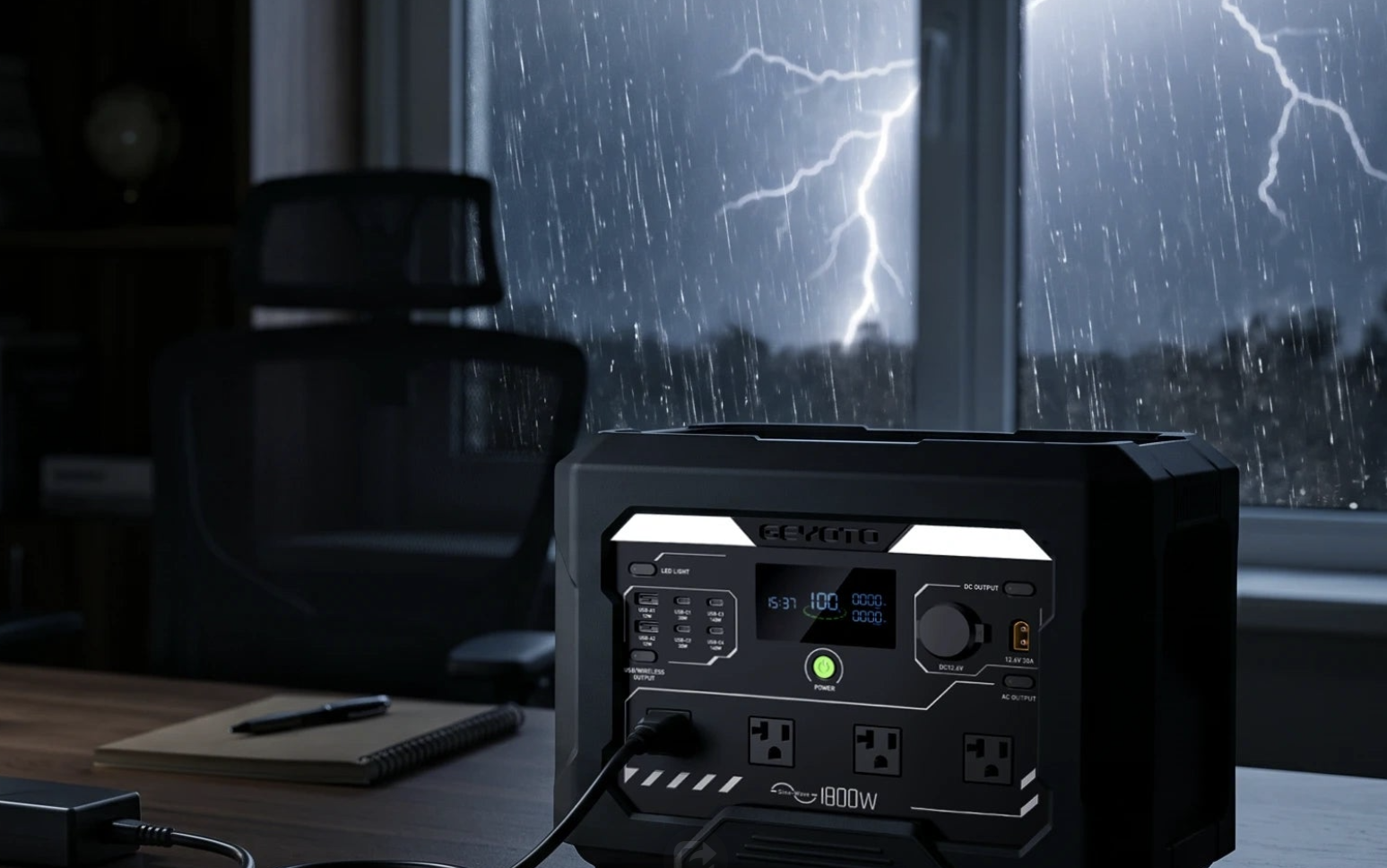
Wilmington, Delaware Jul 2, 2026 (Issuewire.com) - Atmospheric anomalies and unexpected convective storm fronts present a growing hazard to centralized civil utility grids. Severe winter blizzards, high winds, and severe lightning frequently down high-voltage transmission lines unexpectedly. Consequently, organizing a dependable Home Backup Power Station establishes an essential layer of structural security before severe seasonal weather systems arrive. Property owners historically relied on loud, high-emission gasoline generators to combat these frequent structural blackouts. However, fossil-fuel machinery introduces severe carbon monoxide hazards, requires continuous manual refueling, and violates local neighborhood noise ordinances. Modern property management strategies now favor non-invasive, emission-free mobile micro-grids to safeguard family life during localized utility failures. Ultimately, understanding how to deploy these clean energy platforms ensures that residential structures remain safe, warm, and fully connected during the worst atmospheric crises.
The Strategic Blueprint: Auditing Critical Household Circuits and Load Behaviors
Building an effective emergency electrical strategy requires a comprehensive audit of vital domestic electronics and their unique power draw characteristics. Consumers must differentiate between resistive loads, which consume steady amounts of electricity, and inductive loads, which require immense initial starting currents. For instance, basic LED bulbs, mobile device chargers, and cellular routers maintain uniform power consumption profiles throughout their operational periods. Conversely, heavy motorized appliances like full-sized refrigerators, sump pumps, and climate control fans require a massive momentary power spike to activate their internal mechanics. Failing to account for these initial startup requirements can cause an emergency backup system to overload immediately, leaving the household completely vulnerable.
Additionally, spatial placement dynamics dictate the overall safety and accessibility of emergency electrical systems during a severe weather incident. Homeowners should establish clean, dry, and temperature-stable storage zones well away from potential flood lines or high-moisture basement areas. Keeping communication arrays, crucial medical apparatus, and network routing hardware centralized optimizes the deployment of temporary power channels when the main grid fails. This proactive spatial arrangement eliminates chaotic cable routing in the dark and minimizes physical tripping hazards during high-stress situations.
The Disaster Preparedness Checklist: Engineering Benchmarks for Household Energy Firewalls
Discerning consumers look beyond aggressive marketing slogans to evaluate home utility reserves by clear, quantifiable engineering benchmarks. A robust household energy firewall requires systematic evaluation across several operational categories to guarantee high performance under extreme environmental strain. First, the platform must offer excellent non-invasive deployment velocity, requiring zero complex structural retrofitting or manual breaker interlock installations. This immediate readiness allows any adult family member to operate the system safely during an unexpected midnight utility crash.
Second, transient interruption protection defines the system's ability to maintain unbroken operations for delicate high-value consumer microprocessors. A high-quality reserve platform must feature rapid automated transfer dynamics to keep active desktop computers and home clinical monitors online without reboots. Third, a multi-channel load distribution matrix is essential to provide separate, safe electrical paths for multiple equipment classes simultaneously. This protective layout prevents cross-port voltage drops when high-draw kitchen appliances and low-voltage digital accessories draw energy from the same storage core. Finally, clear physical data monitoring interfaces must display remaining runtime calculations accurately to allow precise energy rationing during long-term blackouts.
GEYOTO N1000 as the Immediate Resiliency Core: Zero-Installation Emergency Security
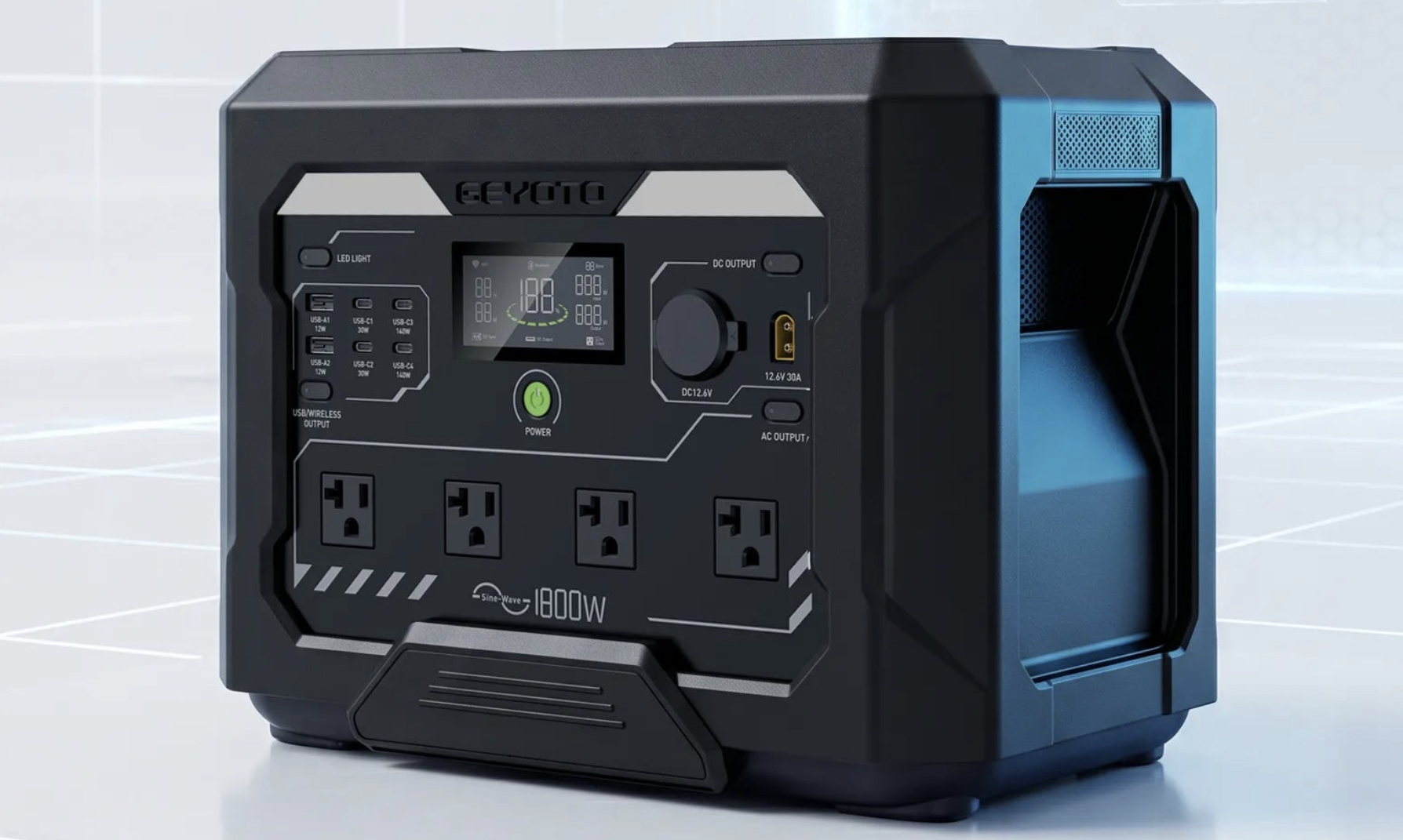
The GEYOTO N1000 offers a premier technical answer to these complex residential requirements by delivering industrial-grade electricity in a compact format. This mobile generator features a highly responsive 10ms level uninterruptible power supply automatic transfer function to secure home electronics. When an atmospheric storm knocks down power lines during a sudden emergency, the internal circuitry shifts to battery backup instantly. This rapid response provides a seamless electrical bridge that preserves critical data on home workstations and maintains steady airflow for CPAP medical equipment.
Furthermore, the platform provides an out-of-the-box plug-and-play architecture that completely removes the need for expensive electrician installation costs or complex wire routing. Users simply attach their essential appliances directly to the chassis terminals to restore vital domestic services within seconds. The system outputs a continuous 1800W pure sine wave current through 9 simultaneous ports, managing up to 95% of standard household equipment. This extensive port topology allows a family to sustain a full-size refrigerator, charge cellular devices, and power communication hubs simultaneously without overloading the system. Additionally, the integrated bi-directional fast-charging mechanism enables a full AC recharge from a wall outlet in just 1.5 hours, ensuring rapid preparation before successive storms arrive.
Systemic Safety Mitigation: The Industrial Safeguards of GEYOTO Technology Limited
Operating high-capacity storage reserves within enclosed domestic living spaces demands uncompromising safety protocols at the fundamental component level. To meet these high residential security requirements, GEYOTO utilizes premium Lithium Iron Phosphate battery cells, commonly known as LiFePO4 chemistry. The rigid crystalline structure of LiFePO4 delivers superior thermal resiliency compared to conventional, volatile lithium-ion formulations. This premium molecular choice provides an exceptional lifespan of over 3000 full charge cycles, ensuring a decade of reliable storm readiness.
Concurrently, the advanced engineering division at GEYOTO Technology Limited integrates a highly sophisticated proprietary Battery Management System into the equipment core. This digital microcontroller framework uses precise thermal sensors to audit cell voltages, internal temperatures, and current metrics constantly. If the software detects a sudden voltage drop or an unexpected temperature spike, it instantly activates multi-layer defensive countermeasures. This autonomous intervention effectively prevents common electrical hazards such as over-charging and short circuits during intense lightning storms.
Preparing Before the Storm: Why Certified Hardware and Strong Warranties Matter
When a storm is already approaching, it is too late to start researching your backup power options. The best time to set up a reliable home system is before the season changes — and the best way to choose one is to look for independently verified safety standards. The GEYOTO N1000 carries full UL and CE certifications, meaning it has been tested by recognized third-party laboratories and confirmed safe for indoor residential use. That matters when you are running the system overnight or in a room with sleeping family members. Beyond safety certification, the unit is backed by a standard 3-year warranty that extends to 5 years upon member registration. For a family treating this as a long-term household investment rather than a single-season purchase, that coverage provides genuine reassurance. Storm seasons come every year — your backup system should be ready for all of them.
Conclusion
Achieving reliable residential weather resilience requires analytical planning, precise appliance load calculations, and the deployment of uncompromised battery hardware. Superficial backup systems lack the necessary inverter capacity and rapid transfer mechanics to sustain core household activities during prolonged outages. By integrating a powerful 1800W pure sine wave inverter, a 1024Wh capacity, and an instantaneous 10ms UPS mechanism, the N1000 sets a new benchmark for home safety. This optimized technical configuration offers complete security to modern families and the confidence every household needs before the next storm arrives. Discover advanced mobile energy solutions and explore detailed household preparedness assets at the official corporate hub: https://www.geyoto.com/.
Media Contact
GEYOTO Technology Limited *****@geyoto.com 300 Delaware Avenue, Suite 210-2207, Wilmington,D E 19801. https://www.geyoto.com/