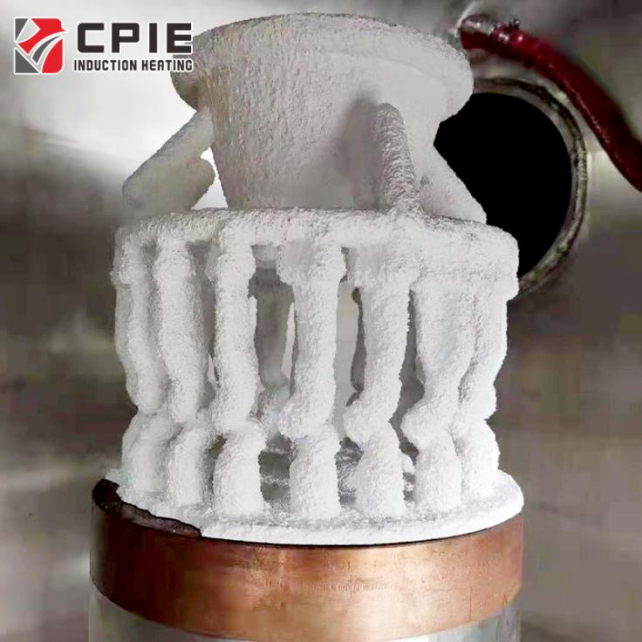
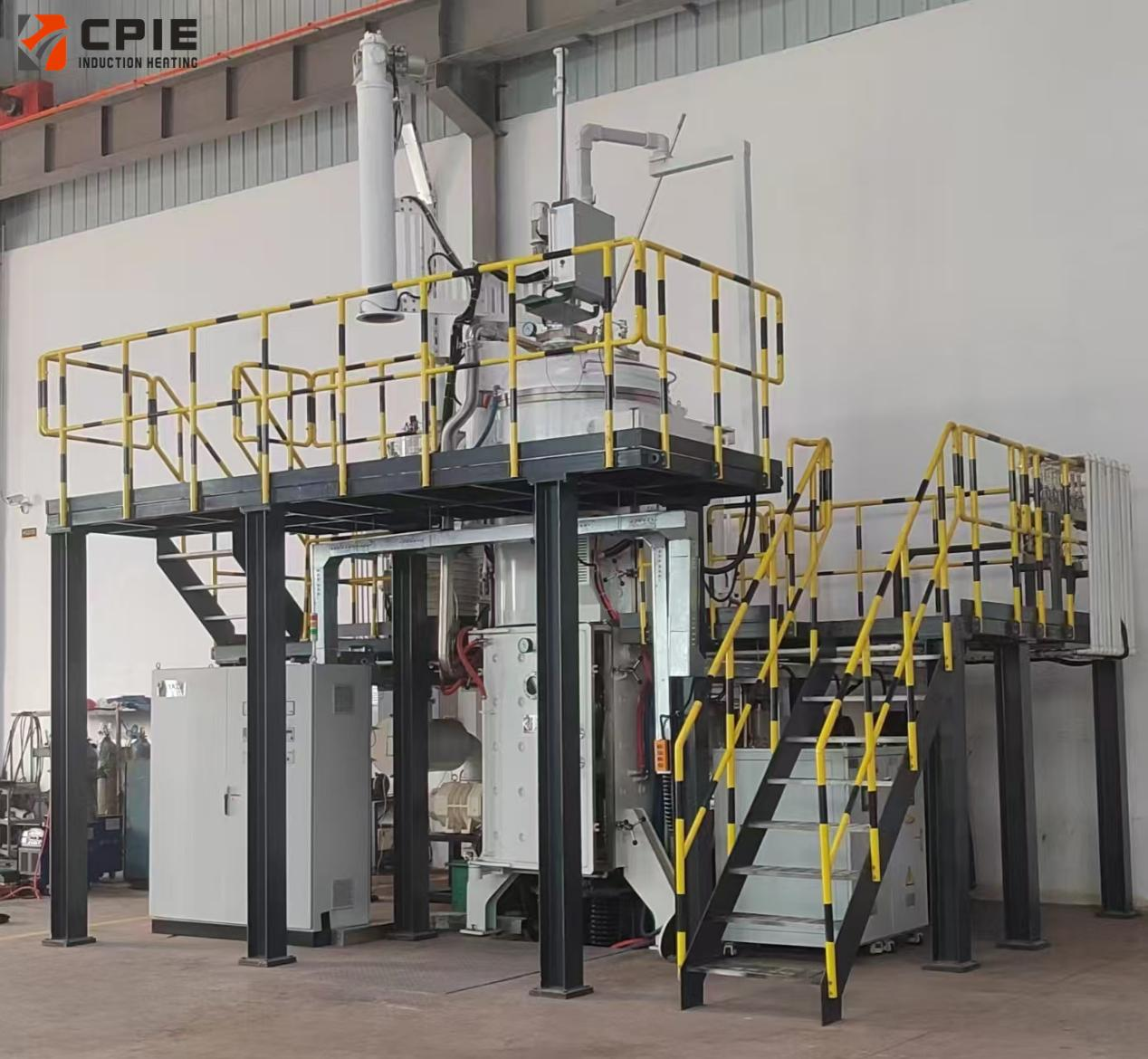
Zhuzhou, Hunan Oct 13, 2026 (Issuewire.com) - In advanced metallurgy, semiconductor manufacturing, and aerospace component production, single crystal furnaces and directional solidification furnaces are two core thermal processing equipment. Both rely on precise temperature field control to regulate metal and crystal solidification behavior, but they differ fundamentally in working principles, final microstructure, performance advantages, and industrial scenarios. Many global manufacturers and purchasers often confuse these two furnaces. This article provides a detailed, industry-oriented introduction to clarify their features and applications. 1. What is a Directional Solidification Furnace (DS Furnace)? A directional solidification furnace is professional industrial equipment designed for controlled unidirectional solidification. Its core working principle is building a stable one-dimensional temperature gradient inside the furnace chamber, dividing the cavity into a high-temperature heating zone and a low-temperature cooling zone separated by a heat insulation baffle. During operation, molten alloy or raw material is poured into a ceramic shell mold. The mold is slowly withdrawn from the hot zone to the water-cooled cold zone at a programmed constant speed. Heat dissipates only along the vertical direction, making the material solidify sequentially from bottom to top. This process restricts random grain growth and forces grains to extend along the stress direction. Core advantages and microstructure features: Eliminates transverse grain boundaries that cause high-temperature failure Forms regular columnar crystal structures with parallel longitudinal grain boundaries Greatly improves high-temperature creep resistance and thermal fatigue resistance Equipped with high-vacuum systems and precise withdrawal control systems, modern directional solidification furnaces avoid material oxidation and ensure consistent solidification quality. With optional grain selection components, it can further upgrade columnar crystal growth to single crystal growth, realizing dual production of directional columnar crystals and single crystals. 2. What is a Single Crystal Furnace? A single crystal furnace is precision equipment dedicated to growing complete single-crystal structures without any grain boundaries. Different from directional solidification furnaces that form columnar crystals, it realizes full ordered atomic arrangement through standardized crystal growth processes. There are two mainstream industrial technical routes: 2.1 Czochralski (CZ) Method Single Crystal Furnace This is the most widely used type for semiconductors and photovoltaics. Under inert argon protection, polysilicon or other crystalline raw materials are completely melted in a quartz crucible. A seed crystal with fixed crystal orientation is immersed into the melt, then lifted and rotated at a stable speed. Atoms grow sequentially along the seed crystal orientation to form integral single crystal rods. It is the core equipment for manufacturing silicon wafers and photovoltaic silicon ingots. 2.2 Bridgman Method Single Crystal Furnace Applied in high-end aerospace superalloy production, this technique derives from directional solidification principles. On the basis of unidirectional temperature gradient control, a grain selector is added to block miscellaneous grains. Only one qualified single grain is retained to grow freely, finally forming grain-boundary-free single crystal castings. This model is essentially an upgraded version of directional solidification furnaces for single crystal customization. Core advantages of single crystal products: Zero grain boundaries, eliminating structural defects Uniform internal stress and extremely stable mechanical and electrical properties Ultra-high high-temperature durability and fatigue resistance 3. Key Differences Between the Two Furnaces To help global customers quickly distinguish and select suitable equipment, we summarize the core differences as follows: Microstructure Output: Directional solidification furnaces mainly produce directional columnar crystals (with parallel grain boundaries); single crystal furnaces produce grain-boundary-free single crystals. Growth Logic: Directional solidification relies on unidirectional temperature gradient cooling; single crystal growth relies on seed crystal guidance + precise temperature field control or grain selection technology. Performance Level: Single crystal materials have better high-temperature resistance, toughness and stability than directional columnar crystal materials. Production Cost & Difficulty: Directional solidification furnaces feature lower cost and higher yield; single crystal furnaces require ultra-high precision control, with higher technical thresholds and production costs. 4. Industrial Applications 4.1 Applications of Directional Solidification Furnaces Directional solidification furnaces are widely used in medium and high-end precision casting fields, especially suitable for mass production of high-temperature structural parts: Aerospace & Gas Turbine: Mass production of directional columnar crystal turbine blades, which are key thermal-end components for aero-engines and industrial gas turbines, balancing performance and cost New Energy & Metallurgy: Preparation of directional solidified alloy ingots and high-performance magnetic materials Scientific Research: Study of alloy solidification mechanisms, grain growth rules and new material development 4.2 Applications of Single Crystal Furnaces Single crystal furnaces dominate high-precision, high-performance manufacturing fields with ultra-stable material properties: Semiconductor & Photovoltaic Industry: Production of 8–12 inch semiconductor silicon wafers and photovoltaic single crystal silicon rods, the foundation of chip and solar cell manufacturing High-End Aerospace: Production of nickel-based single crystal superalloy blades for advanced aero-engines, greatly improving engine thrust and service life Optoelectronic Materials: Growth of sapphire, silicon carbide, YAG laser crystals and other optical single crystal materials 5. Conclusion: In short, the directional solidification furnace is the basic equipment for ordered crystal growth, capable of producing cost-effective directional columnar crystal products; the single crystal furnace is high-end precision equipment for ultimate crystal structure optimization, providing zero-defect single crystal materials for top-tier manufacturing. The two types of furnaces are not mutually exclusive. Bridgman single crystal furnaces are essentially advanced directional solidification equipment, covering the full range from columnar crystal to single crystal production. With the upgrading of global aerospace, semiconductor, and new energy industries, both furnaces have become indispensable core equipment in advanced metallurgy, supporting the iterative upgrade of high-performance metal and crystal materials worldwide.
Media Contact
CPIE *****@hanhegy.com http://www.zzhhgy.com/