Shenzhen, Guangdong Oct 12, 2026 (Issuewire.com) - Modern utility management requires transitioning from manual walk-by meter reading to automated, real-time consumption telemetry. Deploying an advanced smart water metering system (https://diyusmart.com/q/h/product/index.html) enables property owners to detect hidden leaks, automate tenant billing, and conserve vital water resources.
As an experienced utility hardware supplier, Shenzhen Diyu Smart Co., Ltd. (https://diyusmart.com/q/h/com/index.html) manufactures multi-protocol water meters across LoRaWAN, 4G Cat.1, M-Bus, and RS485 standards, allowing operators to match collection architecture to property topology.
Automated water metering cannot rely on a single communication technology across every building asset. Dense multi-family residential towers present different physical constraints than expansive industrial manufacturing complexes. Examining the operational trade-offs of cellular, wired bus, and low-power wireless networks demonstrates how to design a reliable water metering infrastructure for commercial properties.
A Smart Water Metering System Has Four Core Layers
A comprehensive automated water metering system consists of four functional layers that transform physical fluid flow into actionable management data. At the foundation, high-precision volumetric or velocity flow sensors record cumulative consumption through tamper-proof electronic registers.
Communication modules then transmit pulse counts and status flags across wired or wireless channels, while field concentrators or cellular base stations collect packets and route telemetry across secure IP networks. Finally, central management platforms process consumption data, generate tenant invoices, and trigger automatic leak alarms.
System performance depends on the synchronization between these four layers. A robust meter register is of little value if the wireless transmission fails to penetrate concrete utility vaults. Selecting hardware built to international metering standards ensures reliable measurement across the entire asset lifecycle.
4G Cat.1 Fits Dispersed Sites that Need Direct Cloud Connectivity
Direct cellular connectivity provides significant advantages when monitoring geographically dispersed utility endpoints. In municipal water networks or sprawling commercial developments, utility points often sit kilometers apart. Deploying a dedicated 4g water meter eliminates the requirement for local gateway placement by connecting directly to public base stations.
Diyu Smart manufactures gateway-free 4G Cat.1 smart water meters equipped with embedded cellular modems that publish consumption records over MQTT or HTTP POST directly to cloud servers. This direct-to-cloud architecture proves especially beneficial for international projects in countries like Brazil, Morocco, and Argentina where installing private gateway networks is uneconomical.
Integrators must account for ongoing cellular data SIM subscriptions and field signal strength, utilizing external antenna extensions when placing meters inside subterranean steel-reinforced utility pits.
M-Bus and RS485 Fit Buildings with Dedicated Meter Cabling
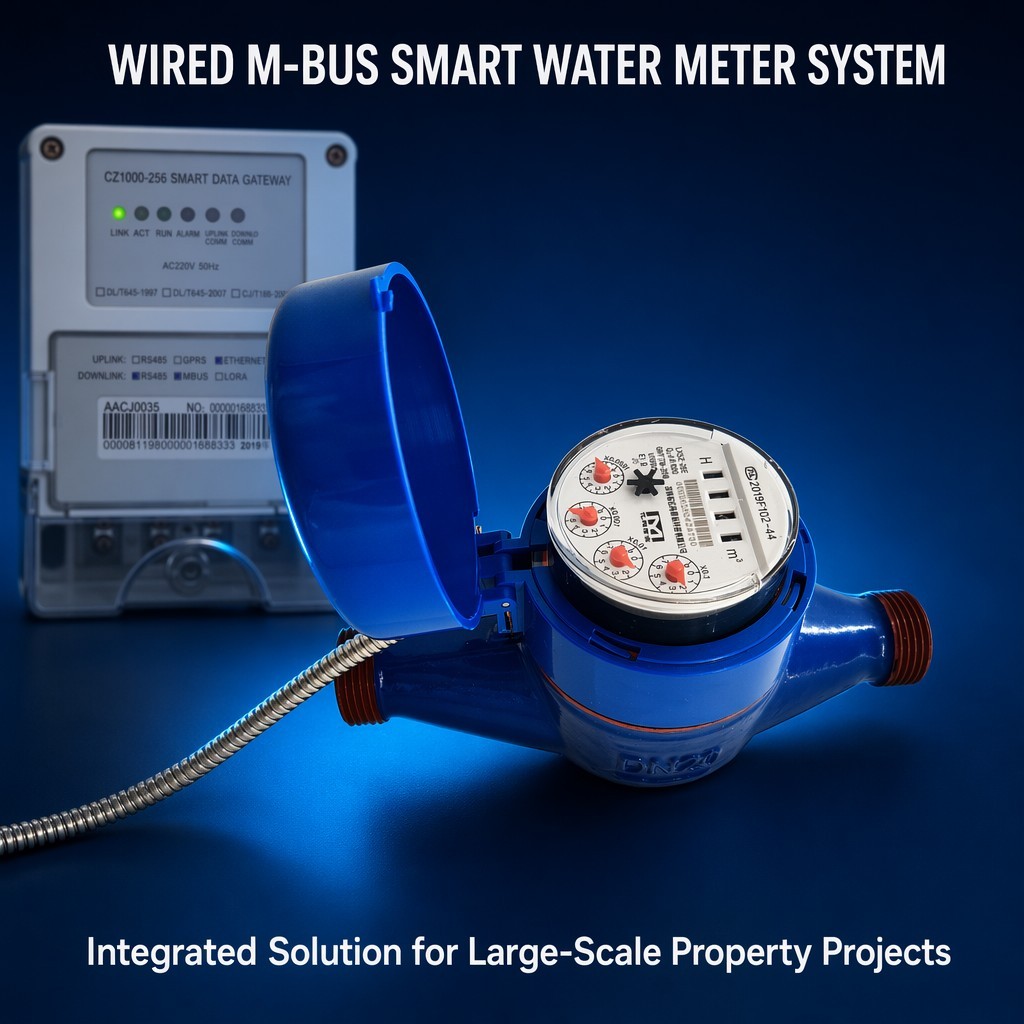
For multi-story apartment developments and newly constructed commercial towers, wired communication networks remain the gold standard for long-term reliability. Installing a dedicated m-bus water meter in each tenant utility riser provides complete immunity from wireless radio interference.
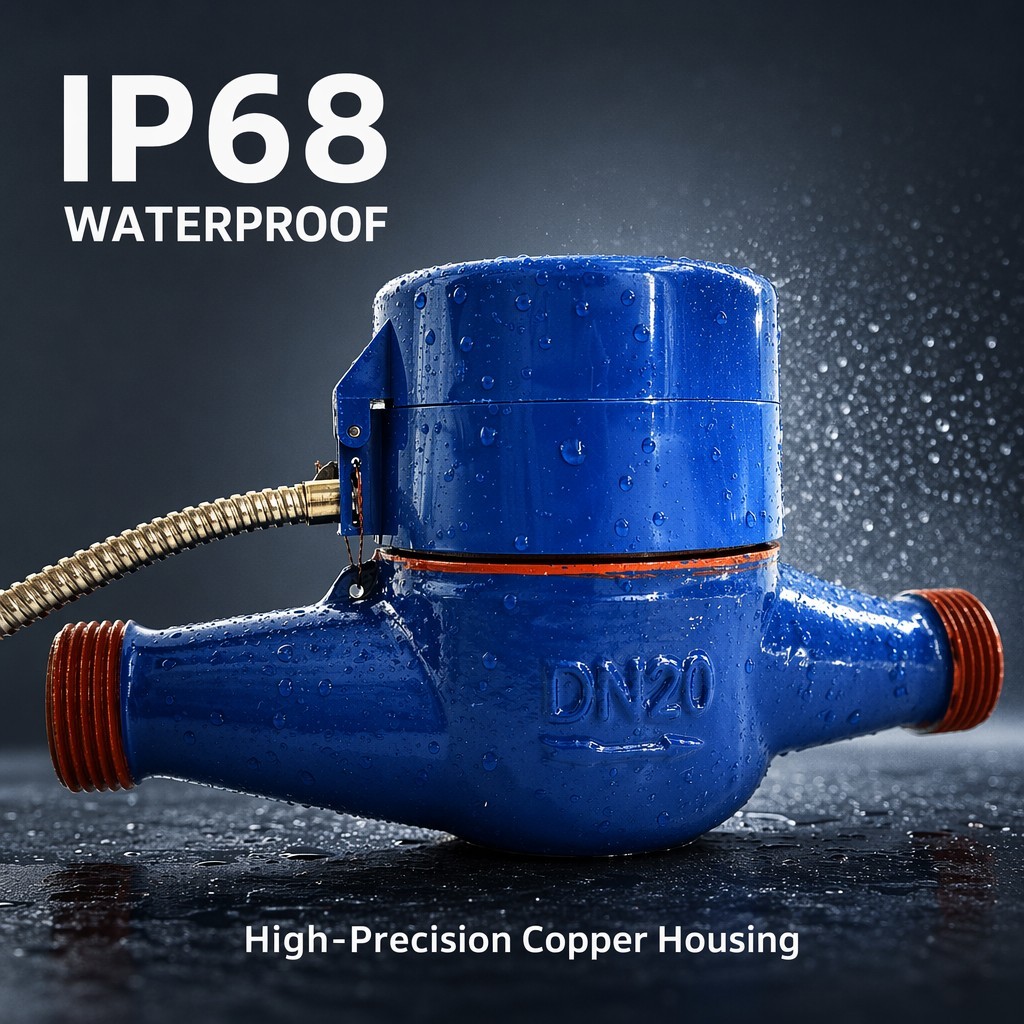
Diyu Smart’s wired photoelectric water meters support both M-Bus and RS485 communication protocols, conforming to ISO 4064 Class B metrological specifications with IP68 waterproof encapsulation to withstand flooded utility chambers.
Wired systems connect directly to central data concentrators such as Diyu Smart’s CZ1000-256 gateway, managing up to 256 meters on a single unit. The wired bus supplies power to meter transceivers, preserving internal battery reserves while providing predictable data collection intervals for automated property management systems.
LoRaWAN Fits Clustered Wireless Metering Where Shared Gateway Coverage Is Practical
When retrofitting existing apartment buildings without pre-installed communication conduits, pulling physical wiring across finished corridors is cost-prohibitive. Deploying a wireless lorawan water meter or lora water meter provides an ideal balance of range, penetration, and battery life.
Operating in sub-gigahertz frequency bands, LoRaWAN signals penetrate deep into internal plumbing shafts and basement riser closets, transmitting small data payloads on scheduled intervals so internal lithium batteries operate reliably for six to eight years.
A single rooftop or corridor gateway, such as Diyu Smart’s 255MG-801, aggregates hundreds of apartment meters into an on-premise network server or cloud software. Where localized smart-home networks exist, a zigbee water meter or wifi water meter can integrate into localized apartment automation hubs. However, higher power consumption and mesh routing complexities make them less common for whole-building utility billing.
Match Meter Topology to the Property Type
Selecting the right water metering architecture requires evaluating the specific layout and operational governance of the property. Different facility categories demand tailored communication topologies to balance infrastructure costs and telemetry speed.
Apartments and Residential Communities
In residential developments, installing a dedicated smart water meter for apartment units and a standardized residential smart water meter network simplifies sub-metering. When meters are stacked vertically in dedicated plumbing shafts, wired M-Bus runs offer exceptional longevity. If cabling is impossible, a star-topology LoRaWAN network avoids running data wires into private tenant living areas.
Industrial Parks Need Clustered and Remote Meter Paths
Industrial parks combine high-density manufacturing plants with isolated perimeter facilities. A flexible iot water meter deployment maps protocols to operational zones. Heavy manufacturing workshops with existing cable trays utilize RS485 Modbus meters connected to building automation systems, while remote effluent treatment plants and distant irrigation valves utilize 4G Cat.1 meters for direct cloud reporting.
Remote Meter Reading Becomes More Valuable When the Data Is Actionable
Deploying a modern remote water meter or an enterprise wireless water meter network eliminates manual meter reading errors and tenant dispute friction. Automated systems capture synchronized monthly index readings across thousands of units simultaneously, allowing property management systems to ingest flow records directly via REST APIs and calculate billing balances without administrative overhead.
Digital registers support immediate leak detection algorithms by tracking baseline usage. If a meter records continuous flow during unoccupied overnight hours, the system automatically flags a potential plumbing failure, allowing maintenance teams to intervene before significant structural water damage occurs.
Resource-Saving Value Comes from Visibility and Control, not from a Meter Alone
Installing smart meters alone does not conserve water; actionable intelligence and prompt physical intervention generate real efficiency gains. High-resolution hourly telemetry identifies hidden pipeline fractures, faulty flush valves, and cooling tower overflow events across commercial properties.
For industrial facilities operating under strict environmental discharge regulations, sub-metering specific cooling loops and manufacturing processes provides clear benchmarks for process optimization. By correlating consumption data with tenant occupancy and production schedules, facility managers reduce utility waste by ten to twenty percent.
Select the Meter Network by Density, Wiring, and Backhaul
A structured evaluation process ensures successful water metering deployment across varied property types. Engineering teams should first verify physical installation conditions to determine whether plumbing risers have existing cable conduits or require battery-operated wireless endpoints.
Assessing meter density guides topology selection, favoring centralized M-Bus concentrators for dense vertical risers and private LoRaWAN gateways for expansive campuses. Planners should also identify isolated buildings that benefit from direct-cellular 4G Cat.1 endpoints to avoid unnecessary private gateway investments.
Verifying data interfaces ensures that meter concentrators and cloud platforms support standard REST APIs and MQTT payloads for automated billing integration.
Engineering contractors and utility operators planning automated water metering installations can contact Diyu Smart to evaluate meter specifications and hardware schedules, or explore the complete metering lineup on the Diyu Smart official website (https://www.diyusmart.com/).
Media Contact
Diyu Smart *****@diyusmart.com http://www.diyusmart.com/