Shenzhen, Guangdong Aug 8, 2026 (Issuewire.com) - Middle East transparent LED projects are frequently installed across commercial façades, premium retail windows, luxury hotels, and large public spaces. In these environments, intense direct sunlight, extreme peak temperatures, blowing dust, high wind loads, and delicate glass building structures jointly dictate the product selection. Evaluating a China Transparent LED Mesh Display Manufacturer requires looking beyond a basic product brochure to demand transparent mesh systems, outdoor protection, curved capabilities, project customization, and localized service teams. As a manufacturer supporting this engineering chain, Shenzhen Chip Optech Co., Ltd. (Chipshow) delivers its C-Trans and C-Vent products backed by an global service network. While commercial buyers often assume that a higher transparency rate automatically equals a better visual outcome, this is a misconception. Brightness, pixel pitch, physical weight, maintenance access directions, and structural ventilation must be carefully balanced against the required viewing distance and specific architectural conditions. A successful Middle East project integrates transparent display parameters, environmental adaptation, structural design, and local support into a single execution plan.
Middle East Façades Require a Climate-And-Structure Fit
A transparent LED façade must be adapted to the actual site conditions. Key inputs include sunlight direction, temperature peaks, dust, wind pressure, coastal salt exposure, curtain-wall load limits, and maintenance access. Procurement teams cannot rely on generic indoor panels when outfitting an exposed high-rise. High brightness is necessary to solve daytime visibility challenges under the intense Middle East sun, but it simultaneously increases demands on the power supply, thermal management, and energy consumption. Conversely, a high transparency rate retains natural daylight and preserves interior sightlines, but it changes the pixel density and reduces near-field image completeness.
System specifications must never be determined in isolation. The project inputs must first establish the target viewing distance, total screen area, installation height, required curvature, structural connections, and whether front or rear maintenance is feasible before entering product selection. Environmental and structural data must precede single product parameters to ensure the installation performs reliably without damaging the host building.
C-Trans Balances Brightness, Curvature and Outdoor Protection
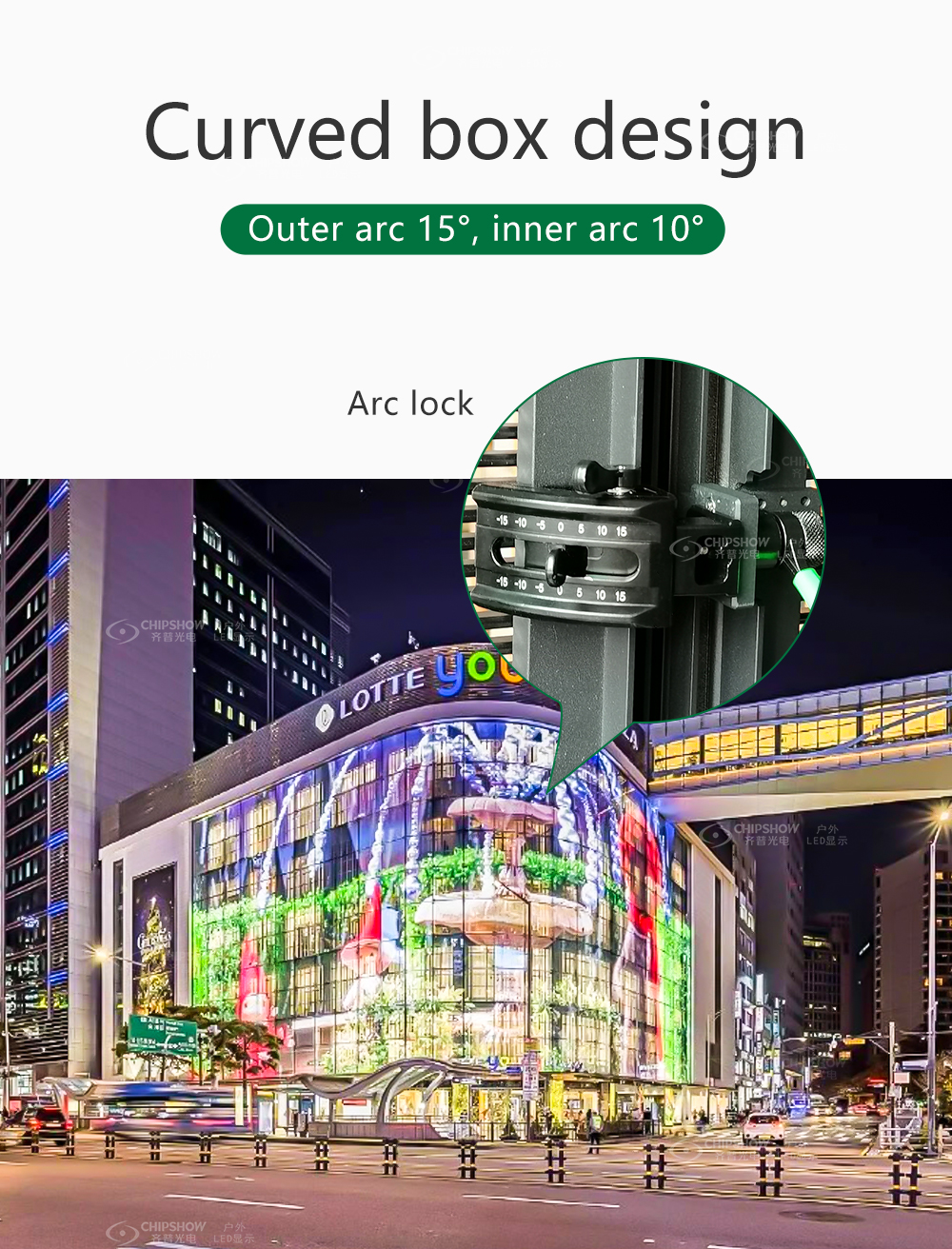
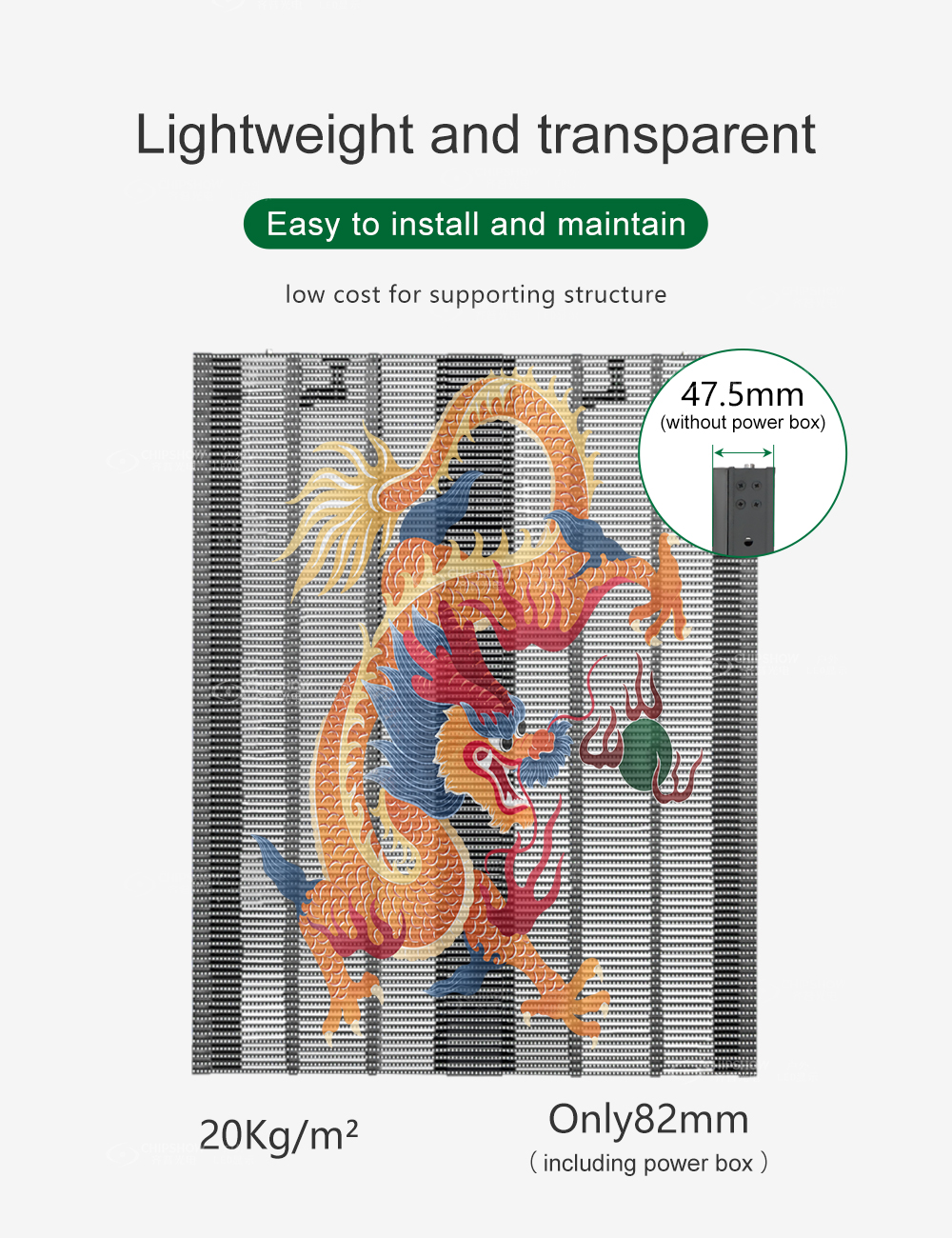
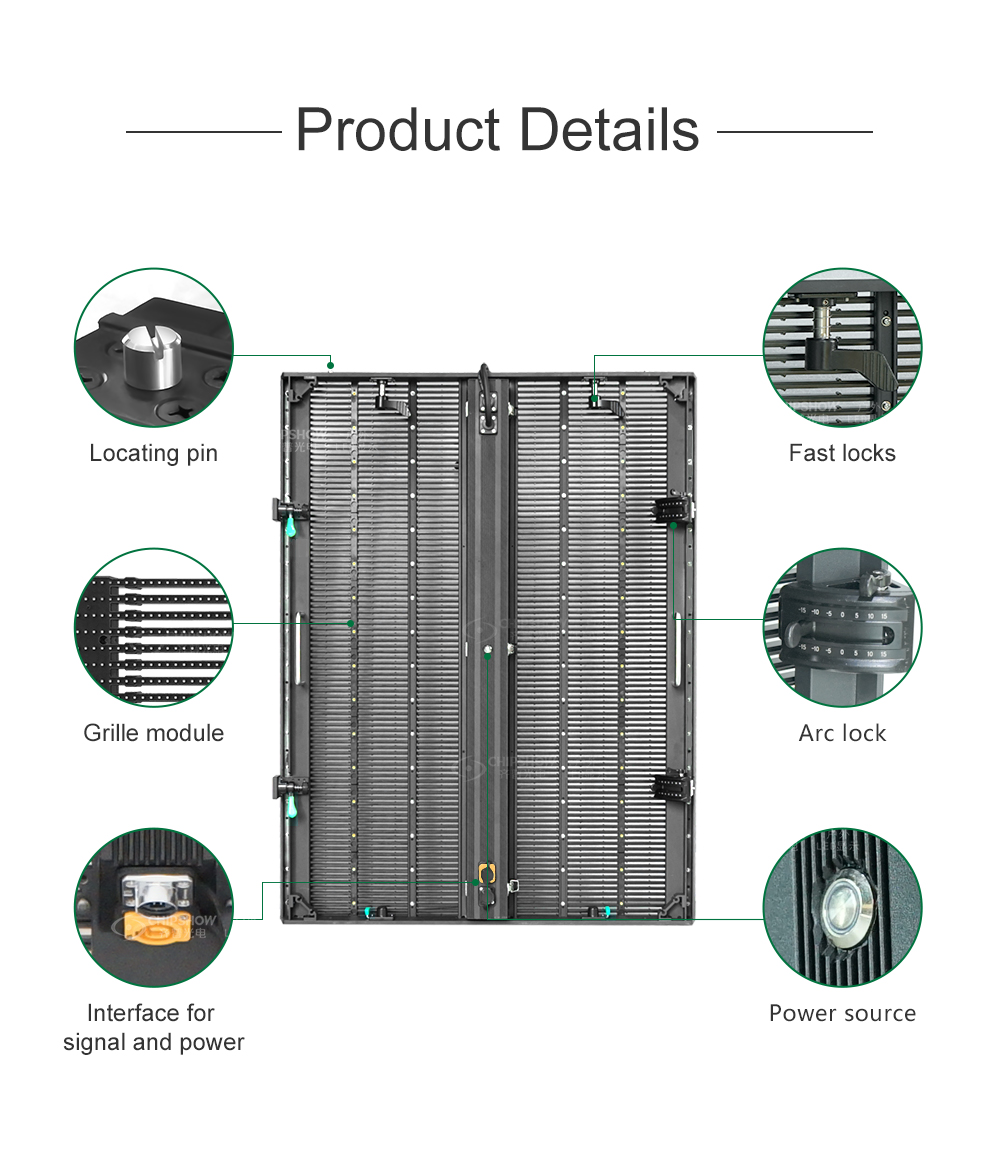
The C-Trans Mesh Curved Outdoor LED series uses an H5.2×V10.4 mm pixel pitch in a 750×1000×82 mm cabinet. It delivers up to 6,000 nits and IP65 outdoor protection. For non-planar media façades, the system supports a flexible 15°/10° curve configuration and maintains a manageable 20 kg/m² weight. This specific combination allows integrators to extend architectural outlines and brand presentations across cylindrical buildings and rounded corners while keeping the structural footprint strictly controlled.
Brightness, curvature, and physical weight must be factored directly into the steel structure and curtain wall load calculations. Creative aesthetic designs cannot be separated from engineering load limits; otherwise, the display risks structural failure during high wind events. By combining curved physical capabilities with strict outdoor protection and medium-distance viewing clarity, the Chipshow C-Trans series establishes a defined product position for demanding façade applications. The IP65 rating ensures that blowing sand and sudden rainstorms do not compromise the internal electronics.
Transparent Product Options Address Different Façade Priorities
Because no single product can address every architectural demand, a tiered transparent portfolio supports varying façade priorities across different commercial real estate projects. The C-Trans Façade series features a P10.41 pitch, 58% transparency, and 4,500 nits of brightness. Front and rear maintenance options support curtain-wall sites with restricted access. For rental applications and premium temporary façades, the C-Trans Active provides a 35% transparency rate, a much lighter 15 kg/m² weight, and curved deployment capabilities that facilitate rapid installation.
When maximizing daylight penetration and reducing added steel structures are the primary project goals, the C-Vent P25 light-bar curtain structure delivers a 63% transparency at approximately 10.7 kg/m². Different series prioritize resolution, brightness, weight, wind resistance, or easy dismantling depending on the exact use case. For Middle East projects, this product depth enables buyers to select systems based on the exact building type and the intended commercial lifecycle.
Regional Service Offices Support Middle East Project Continuity
The value of regional service capabilities extends far beyond the initial sales contact. Regional support moves system planning, spare parts preparation, installation coordination, and troubleshooting escalation into a compatible time zone. Chipshow operates Middle East regional offices alongside major warehouses in the United States and the Netherlands. By working through a technical service network of 50+ authorized agents covering 100+ countries, the manufacturer provides cross-regional sales and technical support that prevents minor hardware issues from becoming prolonged system outages.
For Middle East project execution, procurement contracts should explicitly define the local contact personnel, the exact location of spare parts inventory, response time zones, remote diagnostic procedures, on-site support boundaries, and clear warranty workflows. This documentation converts the vague promise of localized service into an actionable, measurable commitment that maintains project continuity. Having authorized agents in the region ensures that replacement parts are deployed without relying solely on for international shipping clearances.
Project Documentation Protects Façade Performance
Transparent LED project documentation should include structural calculations, module layouts, power schematics, ingress protection ratings, and thermal plans. It should also define maintenance pathways, control-system details, and the spare-parts list. An IP65 rating reflects standardized test conditions. Middle East deployments still require system-level design for installation angles, cabinet seams, cable entries, cleaning practices, and site temperatures.
Custom pitch, cabinet, and enclosure support allows difficult building dimensions to be reviewed before mass production. The engineering review should also confirm curvature and maintenance clearances. By translating product parameters into engineering files, the system's long-term façade performance is protected from on-site uncertainties and installation errors.
Chipshow combines the C-Trans and C-Vent product lines with IP65 options, curved structures, and lightweight formats. Its Middle East service network supports product selection, project coordination, and post-sale maintenance. Driven by the corporate vision "To Build a High-End Outdoor LED Display Brand" and the promise of "Spreading Value, Displaying Beauty," the manufacturer ensures every complex façade project is supported through defined project requirements. Middle East commercial project teams, DOOH operators, and architectural integrators can submit their building drawings, viewing distances, and environmental conditions to initiate a detailed transparent LED solution discussion at https://www.chipshow.com/
Media Contact
Shenzhen Chip Optech Co., Ltd. *****@chipshow.com https://www.chipshow.com