Wuxi, Jiangsu Oct 9, 2026 (Issuewire.com) - The global energy industry shifts rapidly toward higher efficiency in 2026. Power generation facilities continuously upgrade to ultra-supercritical and advanced supercritical technologies to maximize thermal performance. These plants subject heat recovery systems to unprecedented mechanical loads. Consequently, high-pressure feedwater heaters must manage extreme steam pressures and soaring temperature gradients. At the core of these advanced thermal exchange systems lies the massive forged tube sheet. This component acts as the primary pressure boundary separating the high-pressure feedwater from the superheated extraction steam. Because failure at this interface disrupts power grid stability, component reliability remains paramount. Engineering procurement teams require certified manufacturing partners who can supply flawless heavy components. To fulfill this critical technical demand, international buyers cooperate with a High Quality Forged Tube Sheet For High Pressure Feedwater Heater Manufacturer (https://www.hongdaforge.com/high-pressure-heater-tube-sheet-product/) to safeguard power plant infrastructure. These critical components provide the necessary structural safety margin required for continuous, safe grid operations over decades.
Q1: How Does Forging Grain Refinement Directly Influence High-Density Drilling Precision and Dimensional Stability?
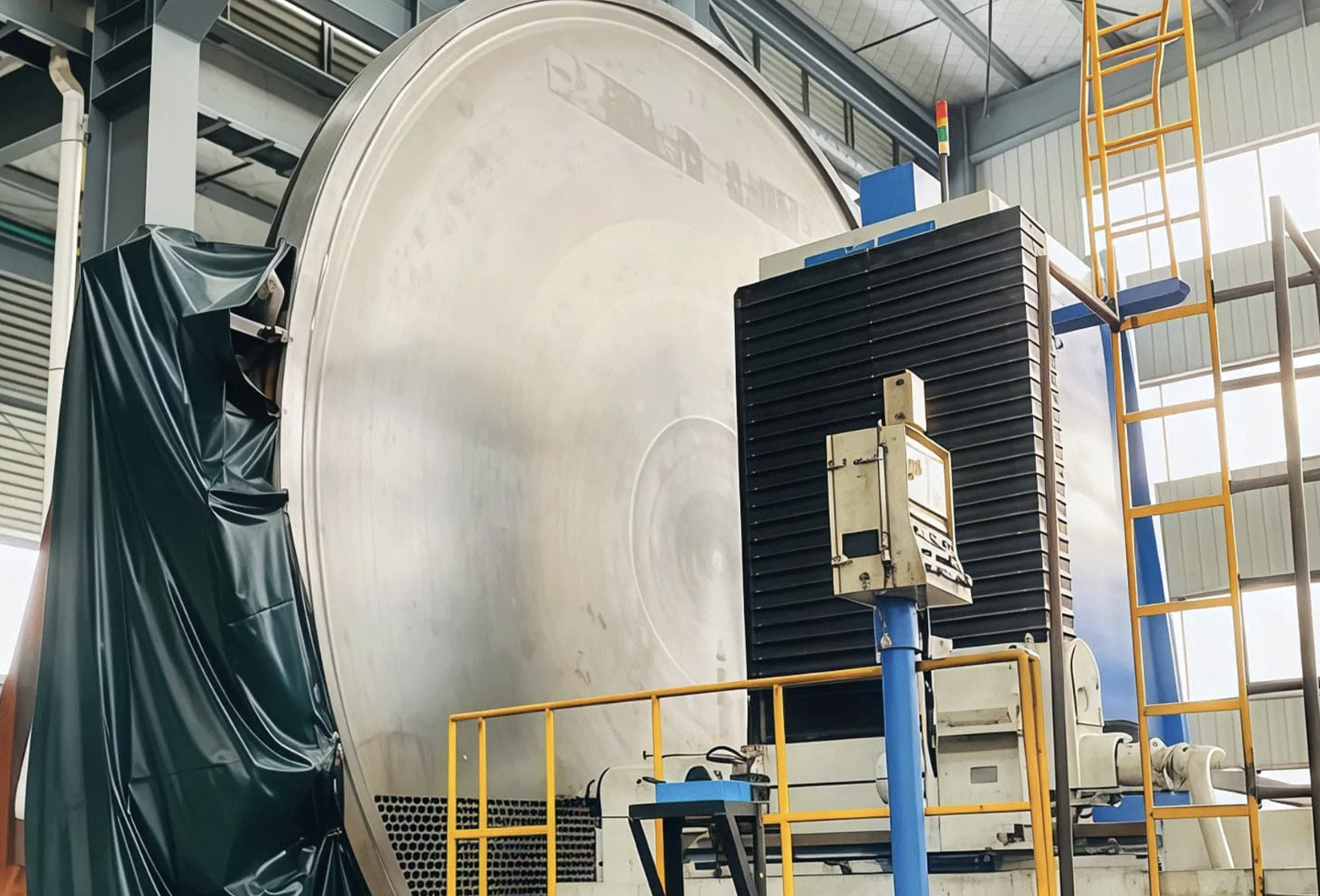
Fabricating an efficient high-pressure feedwater heater requires drilling thousands of deep holes into the thick forged tube sheet plate. This dense hole matrix accommodates the heat exchanger tubes that circulate high-pressure water. However, this intensive drilling process removes a massive volume of metal, which inevitably relaxes internal residual stresses. If the raw forged block contains internal structural imbalances, the component will warp or distort during machining operations. This geometric instability ruins the tight ligament tolerances and hole verticality required for automated tube-to-tube-sheet welding.
To overcome this critical engineering challenge, manufacturers must focus on advanced forging grain refinement. WUXI HONGDA HEAVY INDUSTRY CO., LTD applies massive mechanical force during the hot working stage to break down the coarse as-cast crystalline structures of the steel ingot. Deep penetration forging deforms the metal thoroughly to its innermost core, aligning the grain flow uniformly along predictable mechanical directions. Furthermore, sophisticated thermal processing cycles completely discharge accumulated internal stresses before the block enters the machining workshop.
This meticulous structural refinement ensures that the metal matrix exhibits exceptional dimensional stability. When clients perform complex multi-spindle deep-hole drilling, the tube sheet remains perfectly flat without any geometric deviation. Consequently, this precise manufacturing approach guarantees smooth tube insertion and eliminates alignment defects during final assembly.
Q2: Navigating Standards: Why Do 2026 HPFWH Specs Demand Stricter Purity Than Standard ASME Codes?
Navigating global power generation codes requires a thorough understanding of overlapping technical frameworks. While the standard American Society of Mechanical Engineers codes provide an excellent baseline for pressure vessel safety, they often treat material specifications broadly. In contrast, the Heat Exchange Institute standards impose localized mechanical performance limits tailored specifically for heat exchanger operational realities. The rigorous 2026 specifications for high-pressure feedwater heaters demand much tighter material purity controls than general pressure boundaries.
High-temperature steam and continuous chemical exposure can easily cause hydrogen-induced cracking or stepwise cracking along non-metallic inclusions. Therefore, component factories must implement strict ladle furnace refining and vacuum degassing to eliminate dissolved gases. Technicians carefully review the comprehensive material list (https://www.hongdaforge.com/material-list/) to select premium carbon steels and low-alloy variants with ultra-low sulfur and phosphorus content. Restricting these specific trace elements to absolute minimum thresholds prevents the formation of weak microscopic inclusion bands.
In addition, automated thermal processing manages the cooling curves to achieve uniform microstructural hardness from the surface to the core. This specialized metallurgical discipline ensures the heavy component fulfills both international safety frameworks seamlessly.
Q3: What Inspection Protocols Are Essential to Validate Tube Sheet Performance Under Cyclic Thermal Loads?
Modern electrical grids rely heavily on renewable energy sources like wind and solar power. However, the intermittent nature of these green resources forces traditional thermal power stations to cycle their output rapidly to maintain grid equilibrium. This frequent starting and stopping introduces severe cyclic thermal-mechanical fatigue loads onto high-pressure feedwater heaters. Under these changing conditions, any hidden internal defect can quickly propagate into a major structural crack, threatening the pressure boundary.
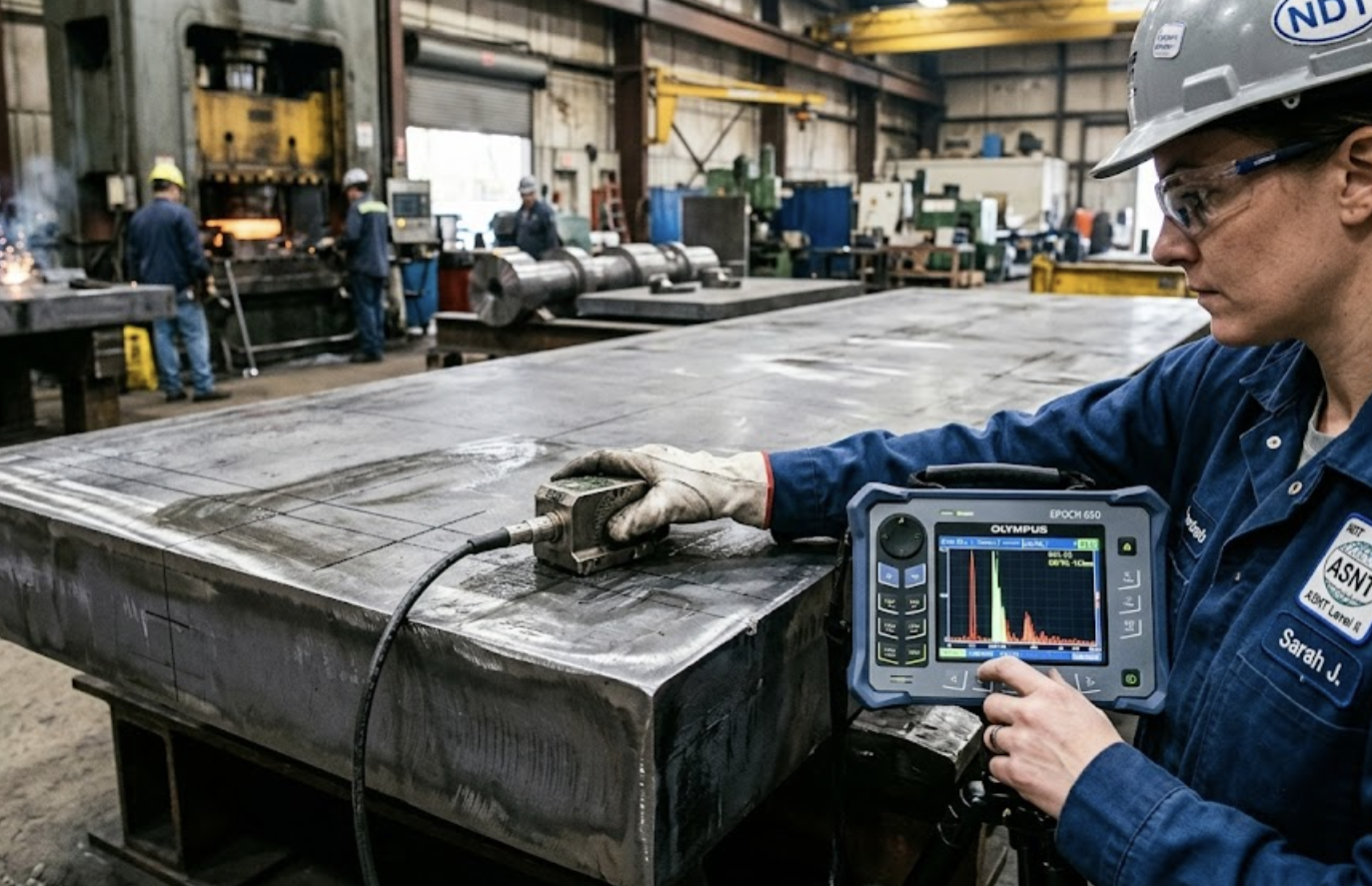
Therefore, operators must implement advanced volumetric non-destructive testing protocols to validate every heavy forging. Surface-level inspections simply cannot detect deep core voids or micro-porosity inside ultra-thick metal slabs. To eliminate these hidden operational risks, HONGDA HEAVY INDUSTRY (https://www.hongdaforge.com/about-hongda/) (WUXI HONGDA HEAVY INDUSTRY CO., LTD) executes rigorous multi-directional Ultrasonic Testing in compliance with international specifications. Qualified inspectors utilize high-penetration transducers to scan the entire three-dimensional volume of the forged block.
This exhaustive ultrasonic evaluation pays specific attention to the highly stressed ligament areas between the planned tube holes. Finding and eliminating internal micro-voids at an early stage guarantees that the tube sheet can withstand millions of thermal cycles without suffering premature structural degradation.
Q4: How Does Integrated Forging and Machining Optimize the TCO for Global HPFWH Manufacturers?
Global industrial equipment manufacturers face intense financial and operational pressures to reduce project delivery schedules. When procurement managers source critical components from a fragmented supply chain, they frequently encounter costly bottlenecks. Splitting heavy forging, specialized heat treatment, and precision deep-hole drilling among separate vendors introduces severe logistical risks. This disjointed approach often leads to multi-vendor communication errors, shipping delays, and complex quality disputes when components fail to meet tolerances. Ultimately, these fragmented practices inflate the Total Cost of Ownership and threaten project execution timelines.
HONGDA HEAVY INDUSTRY addresses this supply chain vulnerability directly by providing a fully integrated manufacturing matrix under one corporate roof. The enterprise manages the entire production sequence from raw material chemical verification to final precision machining. This comprehensive operational control eliminates unnecessary intermediate transportation costs and minimizes material handling damage.
Furthermore, the single-source methodology streamlines the documentation process, providing traceable material test reports and inspection records quickly. By delivering a completely finished component that is ready for immediate assembly, the factory helps global power plant developers compress their construction schedules and minimize total lifecycle costs.
Conclusion
In conclusion, the demanding technical landscape of 2026 redefines the quality standards for high-pressure feedwater heater components. Producing a reliable pressure boundary requires a perfect synergy of metallurgical purity, advanced grain refinement, and absolute dimensional precision during drilling. Fragmented manufacturing methods can no longer satisfy the strict safety and performance mandates of modern ultra-supercritical power infrastructure.
Heavy equipment designers and procurement directors can secure their chains by collaborating with verified, full-process engineering partners. This proactive collaboration eliminates manufacturing errors and ensures zero-defect operations throughout the operational lifespan of the power plant asset.
To analyze detailed processing capabilities, evaluate equipment specifications, and review traceable quality assurance certifications, please visit the official corporate portal at https://www.hongdaforge.com/.
Media Contact
HONGDA HEAVY INDUSTRY *****@asafor.com http://www.hongdaforge.com