Shucheng, Anhui Jul 8, 2026 (Issuewire.com) - Green ammonia has crossed a significant threshold in the past five years. It has moved from demonstration-scale novelty to a commercially fundable industrial category, with project pipelines now spanning fertilizer production, shipping fuel, and long-distance energy transport. As project developers work through front-end engineering, one operational variable consistently distinguishes well-performing long-cycle plants from those that underdeliver on production targets: catalyst longevity. Evaluating a China Leading Ammonia Synthesis Equipment Supplier on specifications alone misses the variable that drives the most consequential operating costs. The iron-based catalysts central to the Haber-Bosch synthesis loop are technically robust — but only when the hydrogen feedstock meets strict purity conditions. That dependency fundamentally reshapes how upstream equipment decisions should be made.
Q1: What actually shortens catalyst life in an ammonia synthesis reactor?
Catalyst deactivation in ammonia synthesis follows a well-documented mechanism. Oxygen, sulfur compounds, carbon monoxide, and moisture in the hydrogen feedstock bind irreversibly to the active iron sites within the catalyst bed. Even contamination at single-digit parts-per-million concentrations accelerates deactivation measurably. The critical word here is irreversible. Unlike thermal sintering, which can sometimes be partially reversed through controlled reduction cycles, chemical poisoning permanently eliminates active surface area. Each poisoning event reduces catalyst efficiency. Over time, the cumulative effect forces either early replacement or acceptance of lower conversion rates and higher energy input per ton of ammonia produced. This is not primarily a reactor engineering problem. It originates upstream, in the hydrogen supply.
Q2: How does hydrogen production method determine feedstock purity — and why does that gap matter at industrial scale?
Different hydrogen supply routes deliver meaningfully different purity profiles at the reactor inlet. Delivered compressed hydrogen introduces variability tied to supply chain handling, cylinder quality, and blending practices at the production source. Steam methane reforming generates hydrogen that inherently contains carbon monoxide and carbon dioxide, requiring additional methanation or pressure swing adsorption treatment before the gas is suitable for synthesis-grade applications. On-site water electrolysis, by contrast, produces hydrogen at 99.999% purity or above at the point of generation, removing the purity variability associated with external supply.
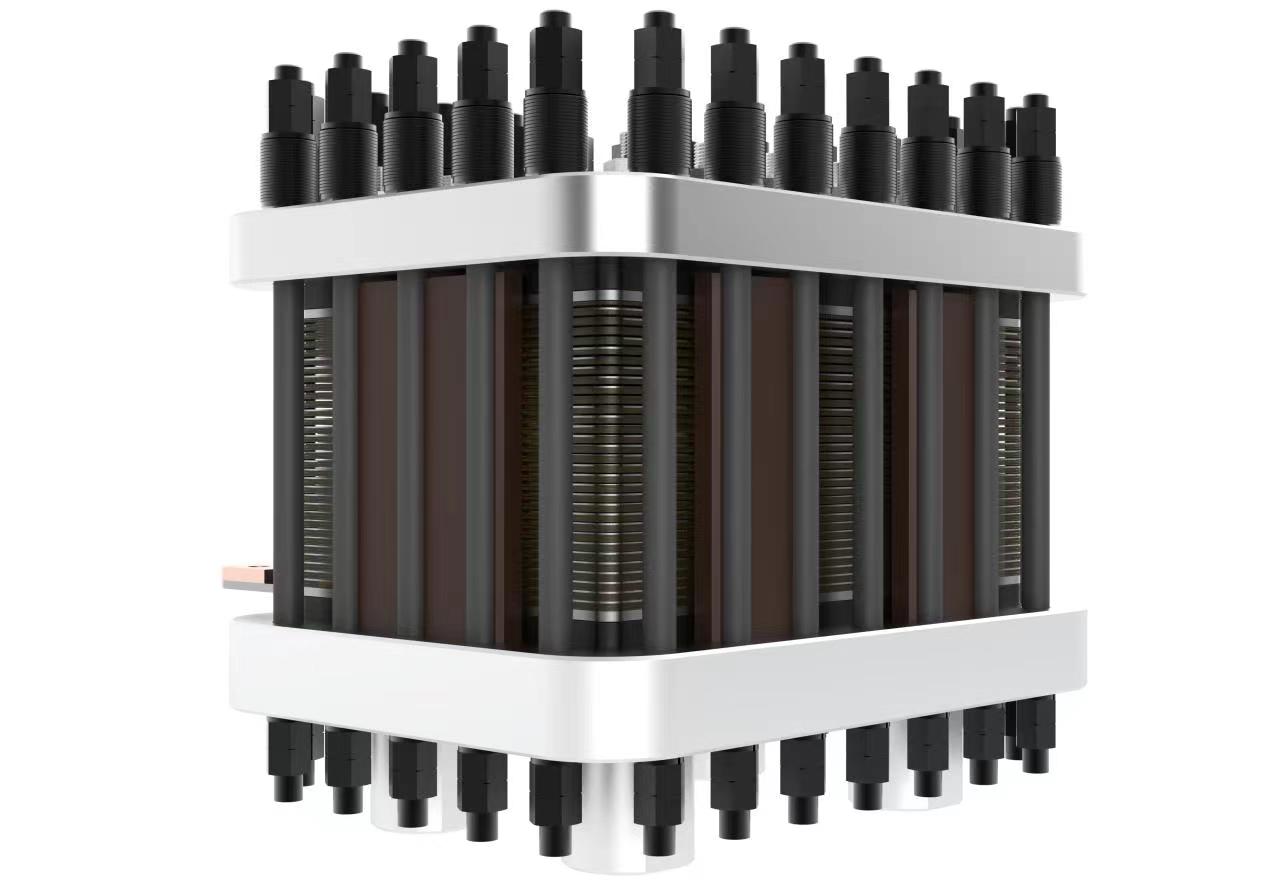
Rubri (Hefei Sinopower Technologies Co., Ltd.) manufactures both alkaline and PEM electrolysis systems across a wide output range. The alkaline electrolyzer lineup covers 1 Nm3/h through 1,000 Nm3/h, addressing continuous baseload production requirements at industrial scale. The PEM electrolyzer range spans 0.1 Nm3/h to 300 Nm3/h, serving projects where variable renewable power input and higher dynamic response are primary design constraints. Both product lines generate hydrogen at purity levels appropriate for direct synthesis-grade application, without secondary treatment as a prerequisite.
Q3: What purity specifications should project teams hold a hydrogen equipment supplier to, and how are those specs verified in operation?
Specification documents state target purity figures. Operational reality requires continuous verification. For standard Haber-Bosch synthesis, total oxygen content below 10 parts per million and moisture below 5 parts per million are commonly cited thresholds. Advanced synthesis catalysts with higher surface area densities carry tighter contaminant limits still. Meeting those figures at commissioning is a baseline requirement. Maintaining them across operating cycles — through load variations, startup and shutdown sequences, and equipment aging — is the harder engineering problem.
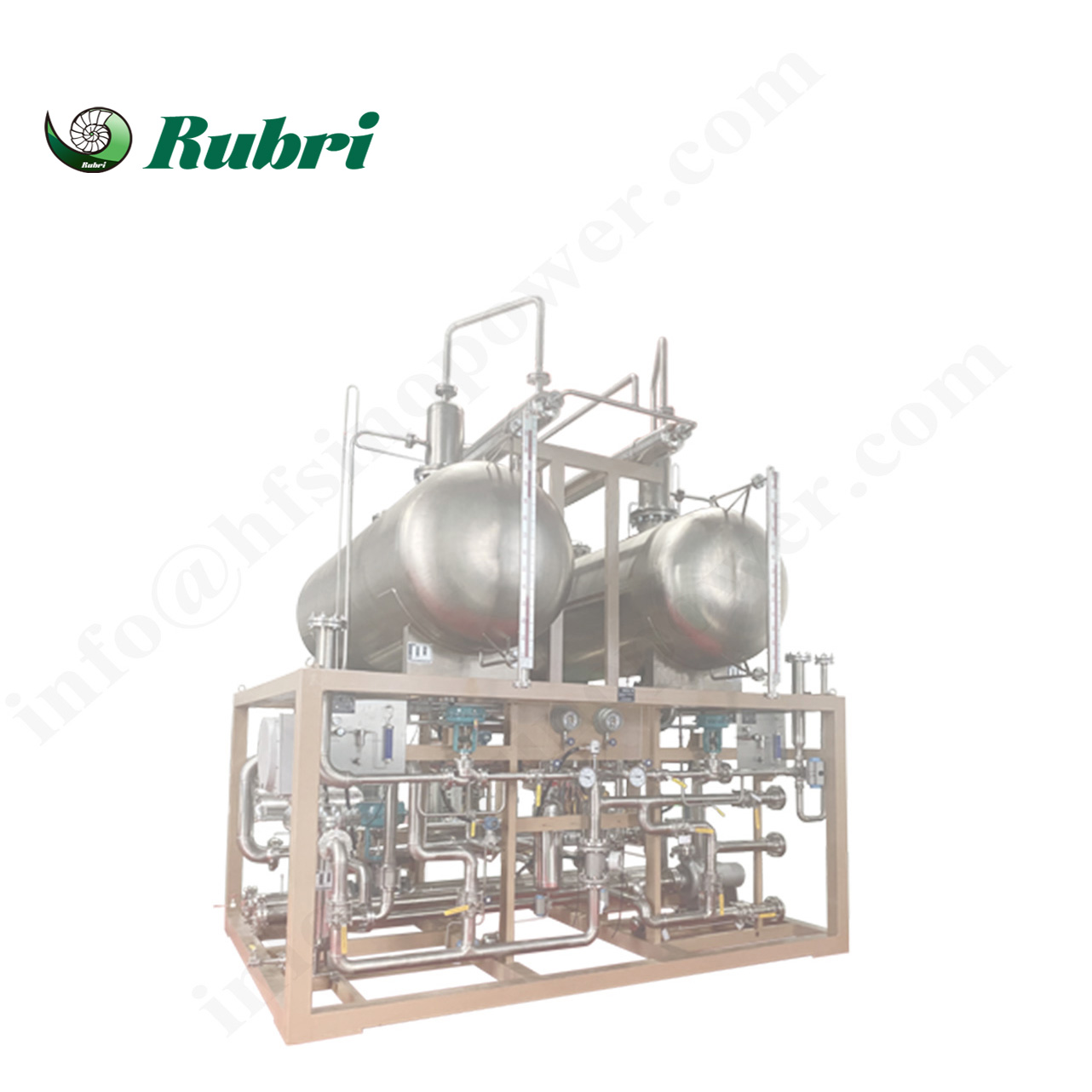
Hefei Sinopower Technologies Co., Ltd. integrates gas-water separation systems and downstream purification modules as standard components within its electrolyzer packages. These subsystems manage moisture removal, trace oxygen elimination, and pressure regulation between the electrolyzer stack and the downstream process interface. The practical result is a conditioned gas stream that holds its specification through normal operating variation, not merely during controlled acceptance testing. For project teams, this shifts hydrogen purity from a design target to a verifiable operational parameter — a distinction that matters considerably when catalyst warranty terms and production guarantees depend on feedstock quality.
Q4: If purity is established at the electrolyzer, what role does compression and storage infrastructure play in preserving it through to the reactor inlet?
On-site hydrogen generation solves the supply purity problem. It does not automatically solve the infrastructure purity problem. Between electrolyzer output and synthesis reactor inlet, hydrogen passes through compression stages, buffer storage, and distribution pipework — each of which introduces potential contamination pathways if the equipment is not specified correctly. Moisture ingress during pressure cycling, outgassing from incompatible elastomers and seal materials, and cross-contamination at multi-gas interfaces all represent failure modes that appear after commissioning, not before it.
Rubri addresses this through a compression and storage product range that extends well beyond electrolysis equipment. The hydrogen compressor module portfolio covers diaphragm, piston, gas-driven, and stationary configurations, suitable for both small-flow and medium-flow applications across different site pressure requirements. Stationary hydrogen storage systems provide buffer capacity that decouples electrolyzer production scheduling from real-time synthesis reactor demand. Together, these components form an infrastructure layer that preserves upstream purity gains rather than eroding them between production and use. Single-supplier integration across production, conditioning, compression, and storage also consolidates technical accountability — a practical advantage when diagnosing performance deviations in operation.
Q5: How should project teams evaluate a China-based ammonia synthesis equipment supplier beyond the headline specification sheet?
Three evaluation dimensions consistently separate capable long-term partners from suppliers whose strengths end at equipment delivery. First, vertical integration: a supplier that independently manufactures electrolysis stacks, purification subsystems, compression equipment, and storage infrastructure carries direct engineering accountability at every interface, rather than relying on third-party components whose performance it cannot fully control. Second, manufacturing traceability: CE and ISO certification frameworks provide the documentation baseline required for project financing, regulatory submissions, and third-party audits. A supplier whose quality records cannot support that documentation trail creates project risk that equipment performance alone cannot resolve. Third, cross-sector deployment experience: a track record spanning fertilizer, industrial gas, power generation, and mobility applications provides real-world evidence that engineering solutions hold under diverse operating conditions. Hefei Sinopower Technologies Co., Ltd. operates across more than forty countries, with a client base that spans research institutions, energy developers, original equipment manufacturers, and large-scale industrial enterprises — a deployment footprint that reflects engineering maturity across multiple application domains.
Q6: What does the total cost of catalyst replacement actually look like — and how does upstream equipment quality change that calculation?
Catalyst replacement costs in industrial ammonia plants routinely exceed the price of the catalyst itself by a substantial margin. Reactor downtime carries lost production costs measured in tons per day. Recommissioning after catalyst changeout requires controlled temperature and pressure sequencing that consumes additional time and energy. Process revalidation follows before full-rate production can resume. When all categories are included, a single unplanned catalyst replacement event can cost multiples of the original material purchase price. Higher capital expenditure on upstream hydrogen production and conditioning equipment, where it measurably extends catalyst service intervals, generates a return profile that straightforward equipment cost comparisons do not capture. Rubri (Hefei Sinopower Technologies Co., Ltd.) positions its integrated product architecture — spanning electrolysis, purification, compression, and storage — as the infrastructure layer that addresses catalyst longevity as a system-level outcome, not a component-level specification. The distinction is consequential for project economics over a twenty-year plant life.
Catalyst life is the metric that ties upstream equipment quality to downstream project performance most directly. For developers building green ammonia projects on viable financial models, that connection makes hydrogen production and conditioning infrastructure a first-order investment decision — one that deserves the same technical scrutiny applied to the synthesis reactor itself. For full technical specifications across electrolyzer, purification, compression, and storage product lines, visit https://www.hfsinopower.com/.
Media Contact
Hefei Sinopower Technologies Co.,Ltd. *****@hfsinopower.com +86 400228199 6 floor, block A, Xiangfeng Creative Park, 211 Hongfeng Road, Shushan District, Hefei, Anhui. https://www.hfsinopower.com/