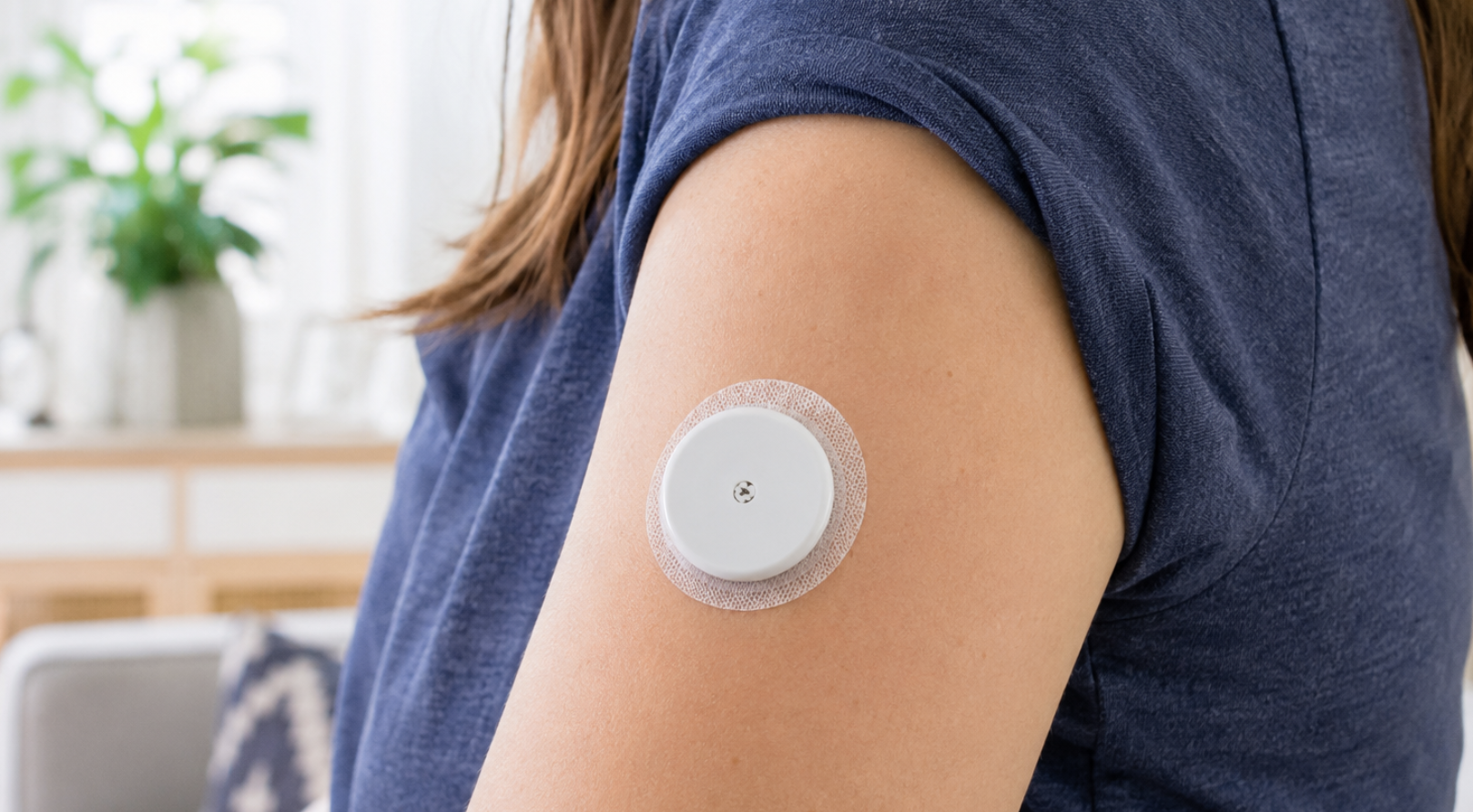
Shenzhen, Guangdong Jun 25, 2026 (Issuewire.com) - Remote patient monitoring has moved from a niche capability to a core part of how healthcare is delivered. Wearable ECG patches, continuous glucose monitors, and portable biosensors now sit at the center of clinical workflows that operate entirely outside hospital walls — transmitting physiological data continuously, often over extended periods, without any opportunity for supervised maintenance. That operational reality puts the internal battery under scrutiny in a way it never was for conventional medical devices. When the power source fails, the data stream stops. And in a monitoring context, a gap in data isn't just an inconvenience — it can mean a missed cardiovascular event or an undetected glycemic spike in a high-risk patient. This is why medical device brands have become notably deliberate about sourcing from High Quality CR2450 Lithium Button Cell Battery Suppliers rather than treating the battery as a commodity component.
The business case for rigorous battery selection is straightforward, even before the clinical risks are considered. Early field failure — what engineers call infant mortality — triggers a cascade of costs: emergency equipment returns, warranty replacements, logistics coordination across active patient populations. For a device manufacturer already operating on tight development timelines, those unplanned expenses can push ROI projections back significantly. The operational burden of replacing coin cells in hundreds of active patient trackers scattered across home environments is a scenario procurement teams work hard to avoid.
There's also the matter of clinical credibility. A device that goes dark during a monitoring cycle creates a blind spot that undermines confidence in the entire platform. Clinicians who can't rely on continuous data streams will be cautious about recommending the device, and that reputational cost is harder to quantify than a warranty claim but no less real. For a power solution for medical equipment to genuinely serve its purpose, the battery has to be the last thing anyone thinks about — which only happens when it's been selected and validated properly in the first place.
Demanding Medical-Grade Benchmarks: The Science Behind High-Capacity 3V Coin Cells
The electrical demands of modern biosensors are more nuanced than most consumer electronics. Bluetooth transceivers, for instance, require stable baseline voltage during transmission cycles — if the voltage sags unexpectedly mid-transmission, sensor calibration drifts and the resulting diagnostic readout becomes unreliable. A flat discharge curve throughout the cell's lifecycle isn't a nice-to-have for these applications; it's what separates a cell that works from one that works most of the time. Lithium chemistries that maintain stable output voltage until near-total depletion are the standard expectation in medical device design for precisely this reason.
Leakage containment is another non-negotiable. The microcircuitry inside a compact biosensor enclosure is vulnerable to corrosive electrolyte in ways that larger electronics simply aren't — a single leakage event can destroy the device outright. Advanced manufacturers address this through nickel-plated steel outer shells rated for internal gas pressure, combined with high-polymer insulating gaskets at the terminal junction. That mechanical layering keeps the electrolyte contained even when the device experiences the kind of minor impacts and vibrations that come with everyday patient use.
Temperature behavior matters too, particularly for devices worn throughout the day by patients who move between indoor and outdoor environments. Standard coin cells can see elevated internal resistance and faster self-discharge when ambient temperature fluctuates significantly. Medical-grade lithium cells use specialized electrolyte formulations engineered to remain stable from cold outdoor exposure to body-adjacent warmth, ensuring that readings stay accurate regardless of where the patient happens to be.
Decoupling Technical Barriers: PKCELL Advanced CR2450 R&D and Material Purity
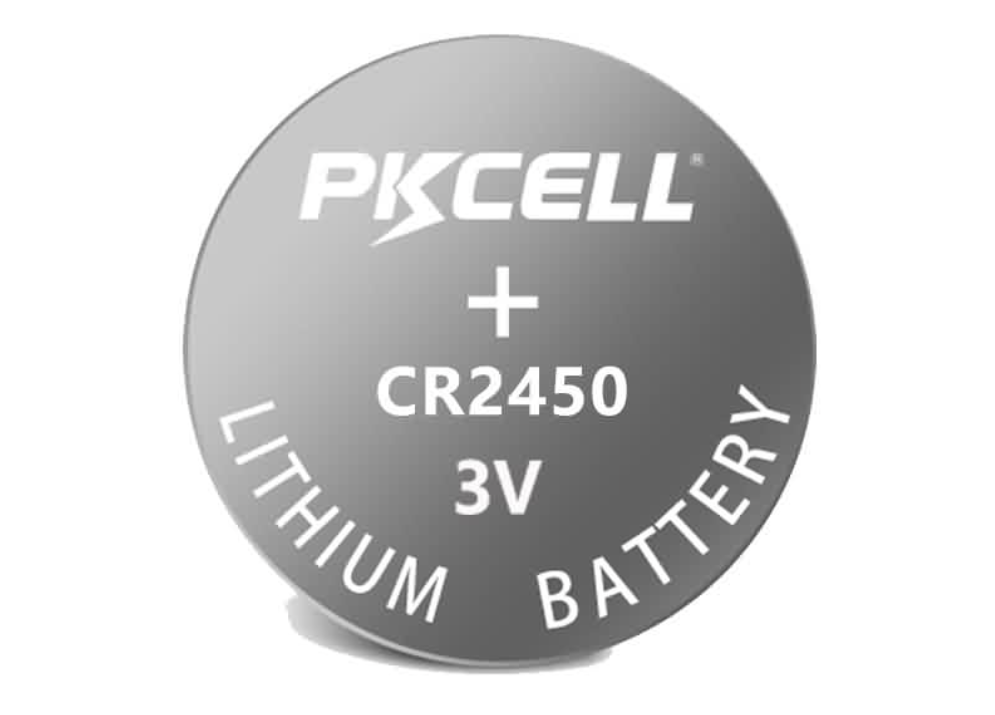
Meeting these specifications at production scale requires more than good chemistry on paper — it requires the manufacturing infrastructure to execute it consistently. PKCell (Shenzhen Pkcell Battery Co., Ltd.) has focused its R&D program on maximizing internal space utilization within coin cell form factors, which directly translates into higher capacity without enlarging the physical footprint. The CR2450 cell achieves a nominal capacity of 600mAh at 3V — a meaningful figure for wearable device designers who need to expand monitoring functionality without making the device larger or heavier than patients will tolerate.
High-purity lithium formulations in both electrodes keep self-discharge below 1% annually under standard storage conditions, which supports a five-year shelf life. That's a practical consideration for medical device brands managing global distribution pipelines, where inventory may sit for extended periods before reaching the end user. PKCell also offers custom lead-tab assembly configurations designed for compatibility with automated surface-mount processing lines — a detail that reduces assembly time and improves manufacturing yield on the device side.
Pulse current handling is an area where internal resistance directly determines whether the cell is usable in a given application. Modern medical IoT hardware transmits data in short, high-power bursts, and a cell with high impedance will exhibit voltage delay under that load — potentially enough to drop connectivity. PKCell addresses this through precise cathode coating technologies and optimized paste formulations that reduce internal resistance to the point where rapid, repeated transmissions remain stable. The practical outcome is that connected health devices can maintain network links through transmission cycles without the kind of transient voltage behavior that causes data loss or forced reconnection events.
Optimizing Healthcare Supply Chains: Securing Zero-Defect Distribution with PKCELL
Regulatory approval is a gatekeeping function in healthcare markets that can't be worked around. Medical device brands need their component suppliers to have the certifications already in place — CE, IEC, RoHS, ISO 9001 — because the alternative is carrying that compliance burden themselves, which slows down product launches and adds cost. Shenzhen Pkcell Battery Co., Ltd. maintains these credentials across its CR2450 portfolio, with full production traceability under ISO 9001 and independent laboratory verification confirming the absence of restricted materials. For brands selling into multiple international markets, having a supplier whose documentation is already audit-ready removes a meaningful source of delay.
End-of-line testing at PKCell covers every finished cell — open-circuit voltage, load performance, and leakage resistance — before anything is packaged for shipment. The intent is to catch manufacturing anomalies at the factory rather than in the field, which is where catching them is expensive. For healthcare brands whose reputations depend on device reliability, that level of factory-side quality assurance is what makes a supplier relationship genuinely strategic rather than transactional. It's the difference between a component vendor and a partner whose process you can build a product launch timeline around.
Corporate Website: https://www.pkcellpower.com/.
Media Contact
Shenzhen Pkcell Battery Co., Ltd. *****@pkcellpower.com 902, Tower B, Hongrongyuan North Station Center, North Station Community, Minzhi Street, Longhua District, Shenzhen, China https://www.pkcellpower.com/




