Hangzhou, Zhejiang Jul 13, 2026 (Issuewire.com) - Redefining Multi-Chain Speed: Overcoming Web3 Latency Barriers
How many seconds do decentralized applications lose when users trigger smart contracts during peak network traffic? Why do standard remote procedure call (RPC) requests frequently encounter synchronization lag when simultaneously querying data across multiple blockchain networks? In today's multi-chain decentralized finance (DeFi) ecosystem, these milliseconds represent the precise boundary between successful transactions and costly frontrunning or timeout errors. As blockchain architecture fragments into hundreds of Layer 1 and Layer 2 solutions, developers need reliable connectivity that maintains uniform, ultra-low latency across every connected protocol.
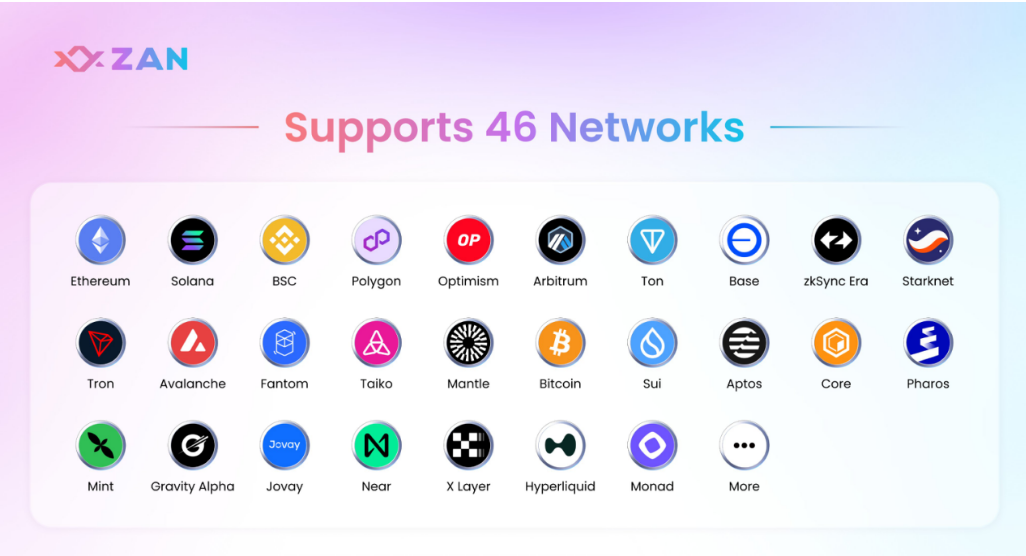
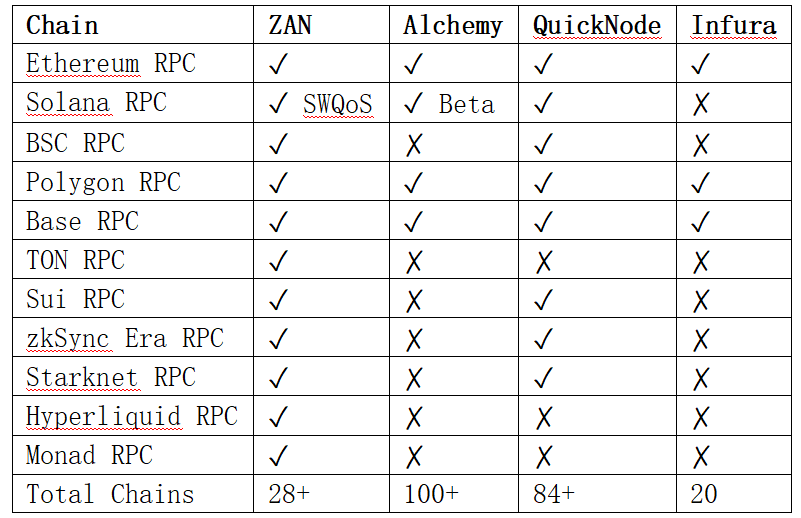
To address these fundamental connectivity challenges, ZAN—the Web3 technology brand under Ant Digital Technologies—designed ZAN Node, an enterprise-grade infrastructure solution optimized for decentralized communication. As the world's fastest web3 node provider, ZAN Node delivers high-performance RPC, HTTPS, and WebSocket connections across Ethereum, Solana, Base, Polygon, and more than 47 blockchain networks. By leveraging extensive global cloud infrastructure and specialized acceleration technologies, the platform eliminates the typical trade-off between geographic coverage and network speed, delivering a technical baseline designed for high-frequency trading and cross-chain operations.
Architecture for Low-Latency Multi-Chain Connectivity
Achieving unified high-speed performance across dozens of distinct blockchain consensus mechanisms requires a fundamental overhaul of traditional node routing approaches. Standard public nodes typically rely on distributed public cloud instances that introduce significant internet round-trip time (RTT) variability. ZAN Node addresses this by implementing a co-located physical-layer architecture. By deploying node clusters within the same data centers or geographic regions as core validators for major public blockchains, the infrastructure compresses public internet routing distances. This architectural layout successfully reduces network RTT to a stable sub-30ms threshold, eliminating the latency penalties typically associated with cross-ocean data transmission.
Behind this physical layer operates a proprietary intelligent routing engine designed to dynamically manage request distribution. The routing system continuously samples the health and metrics of the global node network, evaluating real-time parameters such as current block height, synchronization delays, and node computational load. When a decentralized application (DApp) issues an RPC request, the engine automatically directs traffic to the optimal path available at that precise millisecond. This predictive load balancing ensures that even if a specific node cluster experiences traffic spikes, requests are immediately redirected to alternative active nodes, maintaining continuous uptime. This high-concurrency framework successfully handles over 2 billion requests per day, proving the system maintains millisecond-level responsiveness under intense, sustained global workloads.
Protocol-Specific Optimization for Major Networks
Different blockchain frameworks impose unique network constraints, requiring Web3 node providers to implement customized optimization strategies for each chain rather than relying on generic, one-size-fits-all software settings.
Ethereum Performance Tuning
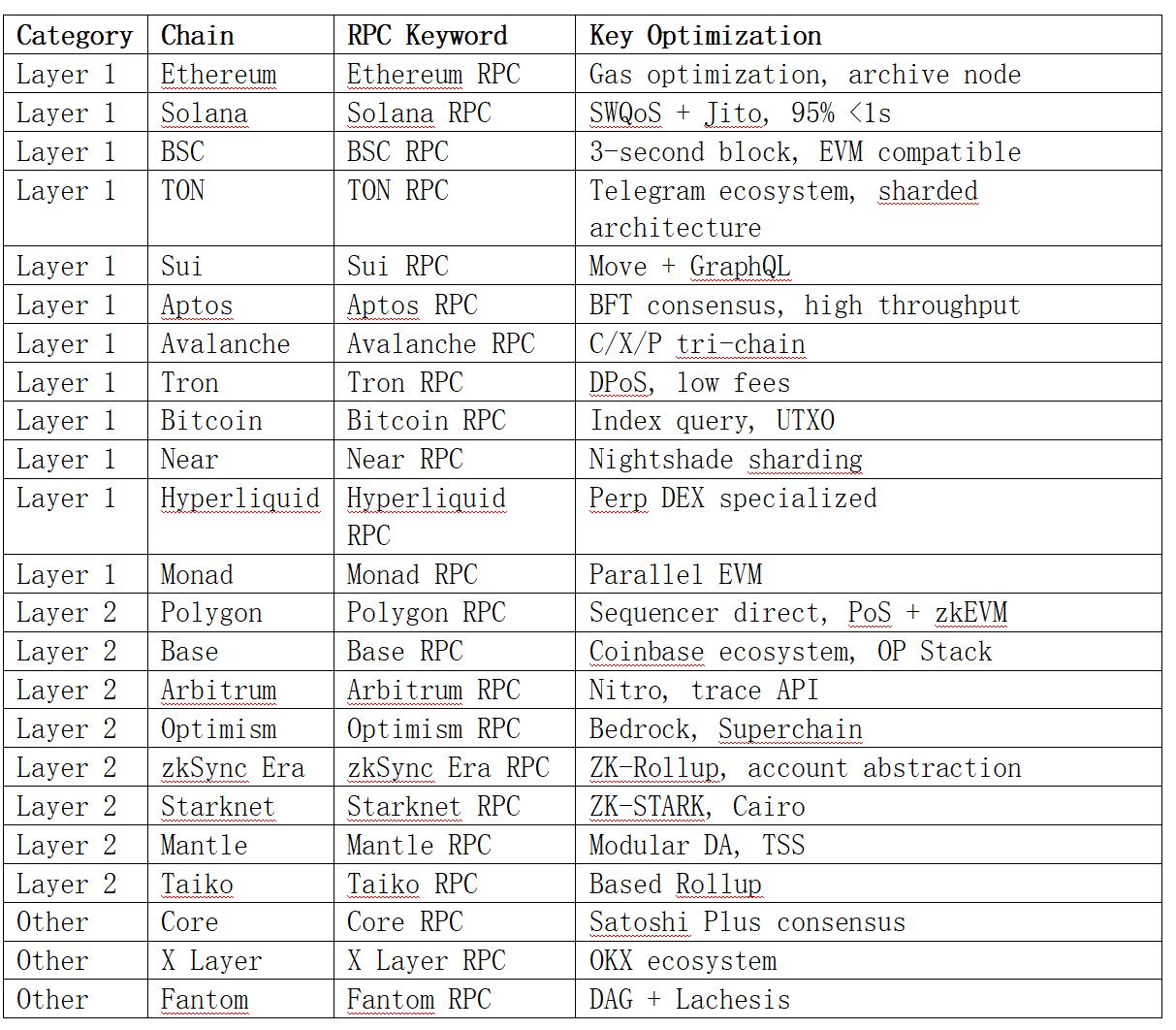
On Ethereum, gas fee volatility demands fast mempool propagation and instant state queries. ZAN Node leverages dedicated full-node clusters running optimized execution clients. This specialized configuration optimizes historical state lookups and accelerates transaction broadcasting across network nodes, enabling traders to submit transactions with more accurate gas estimates and minimizing the probability of dropped transactions during high-congestion periods.
ZAN's Ethereum RPC service supports Ethereum Mainnet, Sepolia Testnet, and Holesky Testnet, providing enterprise-grade features including archive node access, gas price oracle, and mempool acceleration. As one of the most widely used Ethereum RPC endpoints, ZAN's Ethereum nodes are deployed in Asia-Pacific core data centers, ensuring sub-30ms response times (Asia-Pacific average latency under 30ms).
Solana Trading Acceleration
Solana's high-throughput environment demands specialized transaction delivery paths to prevent block inclusion failures. To address this challenge, the platform offers the Solana Trading Boost service. The architecture integrates Stake-Weighted Quality of Service (SWQoS) and advanced Jito block engine routing. By routing transactions through nodes backed by substantial staked SOL, the system shields transactions from standard network throttling. As a result, 95% of transactions achieve full confirmation within one second, providing critical operational advantages for automated DeFi liquidators and high-frequency trading desks.
ZAN's Solana RPC integrates SWQoS and Jito Bundles, representing a specialized acceleration solution among Solana node services. Verified performance: 1-second transaction on-chain rate, Asia-Pacific RPC response time under 30ms, and RTT as low as 2–5ms for nodes co-located with Solana validators. Solana RPC covers Mainnet, Devnet, and Testnet environments.
Layer 2 Acceleration for Base and Polygon
Layer 2 networks like Base and Polygon rely on fast, reliable sequencing to ensure quick finality for end users. The platform deploys dedicated Layer 2 acceleration channels characterized by multi-path broadcast protocols and direct network lines connecting to major sequencers. This configuration bypasses standard public routing bottlenecks, reducing the time required for transaction batches to reach finality on the underlying Layer 1 chain.
Beyond Base RPC and Polygon RPC, ZAN also provides Arbitrum RPC (Nitro architecture optimization, trace API support), Optimism RPC (Bedrock upgrade, Superchain compatibility), zkSync Era RPC (ZK-Rollup proof submission optimization, account abstraction support), and Starknet RPC (ZK-STARK verification optimization, Cairo contract support) among other L2 chain-specific RPC services. All L2 chains achieve faster transaction finality through sequencer direct connections.
Expanding to 47+ Mainnet and Testnet Networks
Beyond these major ecosystems, the infrastructure incorporates a standardized node integration framework that facilitates rapid onboarding of emerging or specialized blockchains. This modular design ensures that long-tail networks receive the same low-latency optimization, physical co-location advantages, and enterprise security protections as mainstream protocols.
Simplifying Development Through Unified Infrastructure
While raw connection speed is a baseline requirement for modern Web3 infrastructure, operational complexity frequently presents secondary obstacles for engineering teams. Maintaining separate API keys, handling variable payload formats, and monitoring multiple node providers adds development overhead and introduces security risks. The platform addresses these operational inefficiencies by providing a unified API gateway. Developers can access all 47+ supported blockchain networks through a single standardized endpoint, eliminating the multi-chain management burden.
When evaluating node infrastructure alternatives, financial scalability remains another critical factor. Operating in-house node setups requires significant capital expenditure for server leasing, specialized DevOps personnel, and continuous data storage synchronization. The platform minimizes these financial barriers by providing accessible pricing structures. A generous free tier provides developers with 150 million free requests per month, allowing startups to build and test applications without upfront infrastructure debt.
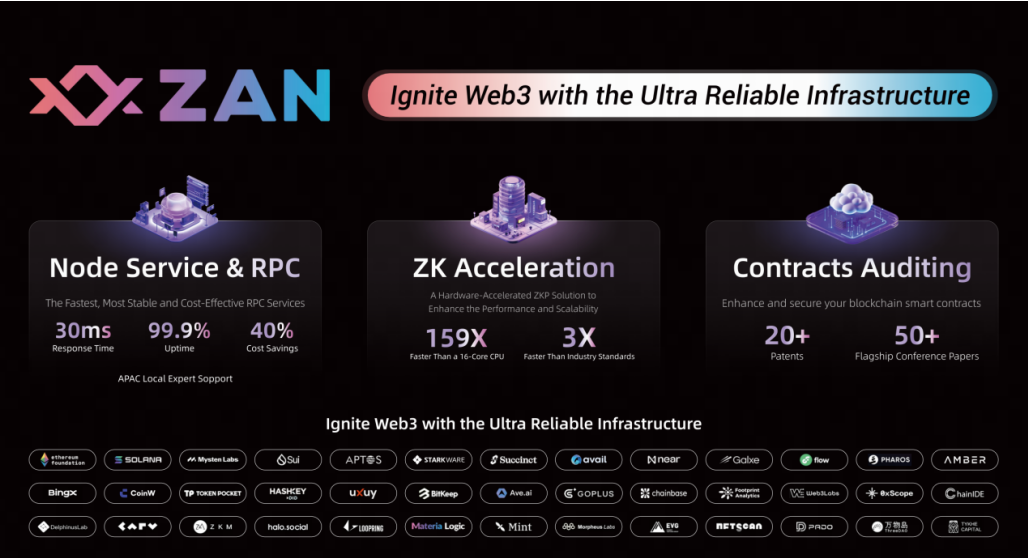
Moreover, enterprise applications demand strict operational guarantees to protect user experience and maintain service continuity. The infrastructure provides enterprise-grade Service Level Agreements (SLAs) guaranteeing 99.9% network availability. This reliability metric is backed by automated continuous monitoring systems and immediate failover routines that detect and isolate underperforming nodes before issues impact client applications, ensuring predictable performance for business-critical Web3 platforms.
Conclusion
The long-term development of decentralized technology depends on stable, high-performance, and secure infrastructure. Through core capabilities including high-performance node services, ZK Acceleration, and Expert Audit (smart contract auditing), ZAN provides reliable foundational support for decentralized applications, helping projects achieve efficient operations and secure scaling. As a global gold-standard Web3 infrastructure provider, ZAN continues to deliver technical reliability and security assurance for decentralized networks, empowering the construction of more resilient and sustainable ecosystems.
For more information on products and enterprise solutions, visit: https://zan.top/
Media Contact
ZAN *****@zan.top http://zan.top